Burglar Bars for Aluminium Windows: the Africa call
In South Africa the bars question is not optional: the Stats SA survey puts housebreaking at an estimated 1.5 million incidents in 2024/25, and the burglar bars on the ground floor are the first line the schedule has to answer. This piece runs the two bar lines — the steel retrofit that the market already buys and the frame-integrated grille that ships with the aluminium window — against the sightline, the fixing line, and the document pack, with the glazing side handed to the security glazing article it belongs to.
Short answer
The security column of the schedule is three lines, not one: the bar line that stops the opening, the glazing line that keeps the glass together when the bar is tried, and the hardware line that holds both. The steel retrofit is the market default because the existing housing stock is not new aluminium, and it keeps being the right call on the retrofit job. The frame-integrated grille is the right call when the window is new, because the bar, the frame, and the glazing are specified and tested as one unit, with the report issued per order and per model.
Why the bars question lands on the window
The window is the softest point on the ground floor of a South African house, and the bars are the answer the market has given it for a generation. The Stats SA Governance, Public Safety and Justice Survey puts housebreaking at the top of the household crime list — an estimated 1.5 million incidents affecting around 1.1 million households in 2024/25, roughly 5.7 percent of all households — with home robbery second at 259,000 incidents. The survey also carries the number that matters to the security line: about 43 percent of the households that experienced housebreaking reported some or all of the incidents to the police, which is why the deterrent line at the window carries as much of the argument as the response line after it. The burglar proof windows that the market installs are the visible part of that deterrent, and the schedule is where the material of the bars gets decided.
The steel retrofit: the market default
The default bar on the South African residential window is the steel section — the stainless bar or the welded steel grille that the fabricator bolts to the sash or the frame after the window is on the wall. The category is wide: the ready-made steel bar set that the trade fits on the standard opening, the welded grille that the local fabricator builds to the opening on site, and the DIY steel burglar bar set that ships in the white or the bronze finish for the timber and the steel frame. The retrofit line exists because the housing stock exists — the window that is already in the wall is a timber, a steel, or an aluminium window of any age, and the bars that go onto it are made to the opening, not to the frame design. The steel line answers the security question directly, and it answers it on the window the project already has, which is why it is the default the schedule has carried for decades.
The honest reading of the retrofit is that it is a second layer fitted to a first layer that was not designed to carry it. The fixing goes into the frame after the frame is finished — the bolt, the clip, or the weld tab on the bar shoe — and the bar profile, the finish, and the sightline are set by the fabricator rather than by the window drawing. The opening behaviour is the line the retrofit has to live with: the sash that opens past the bar, the window that stops opening at the bar line, and the grille that the frame was never sectioned to carry. None of that is a fault of the steel — it is the cost of a layer that arrives after the frame is done, and it is the cost the frame-integrated line removes.
The frame-integrated grille: the factory line
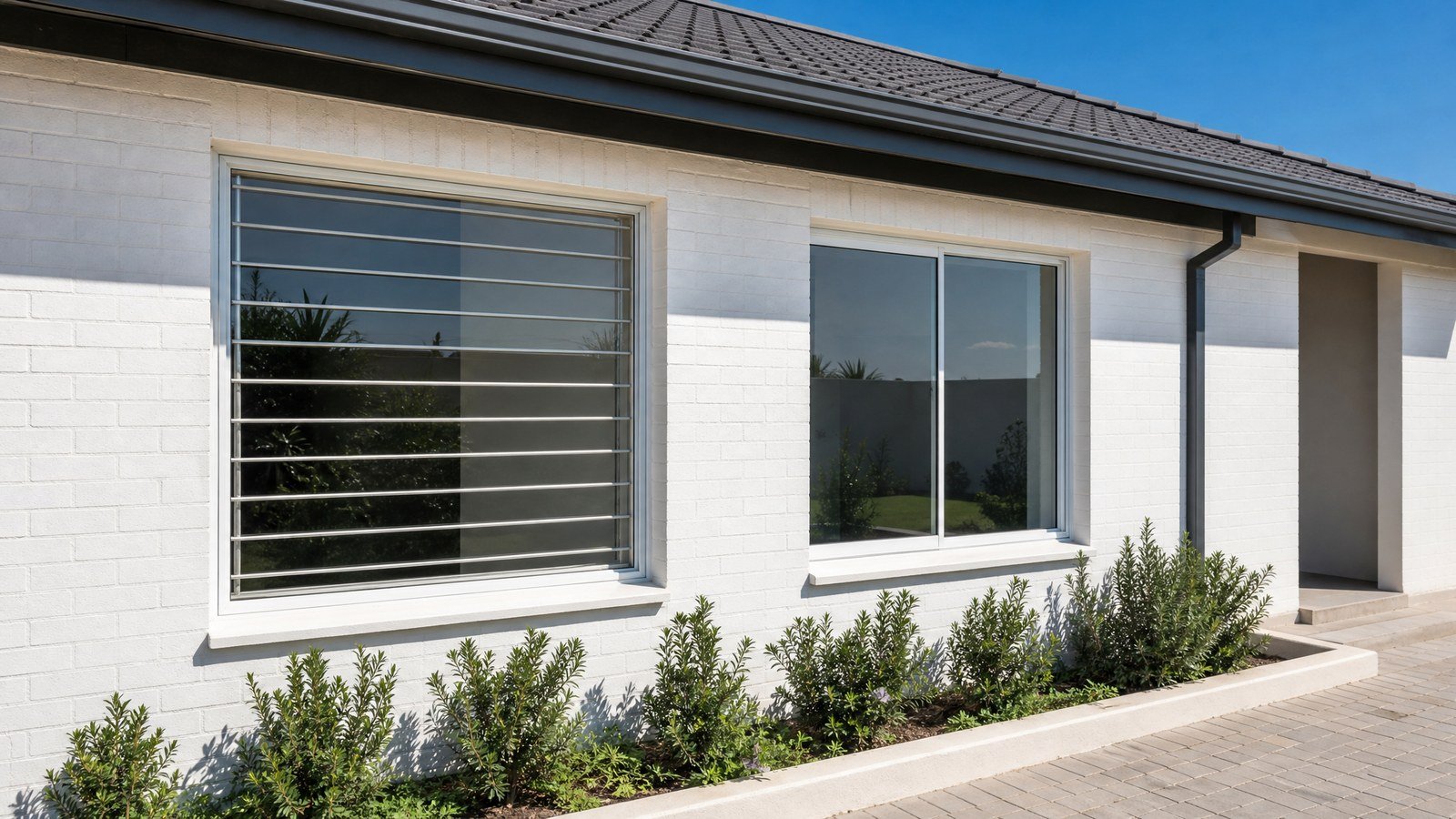
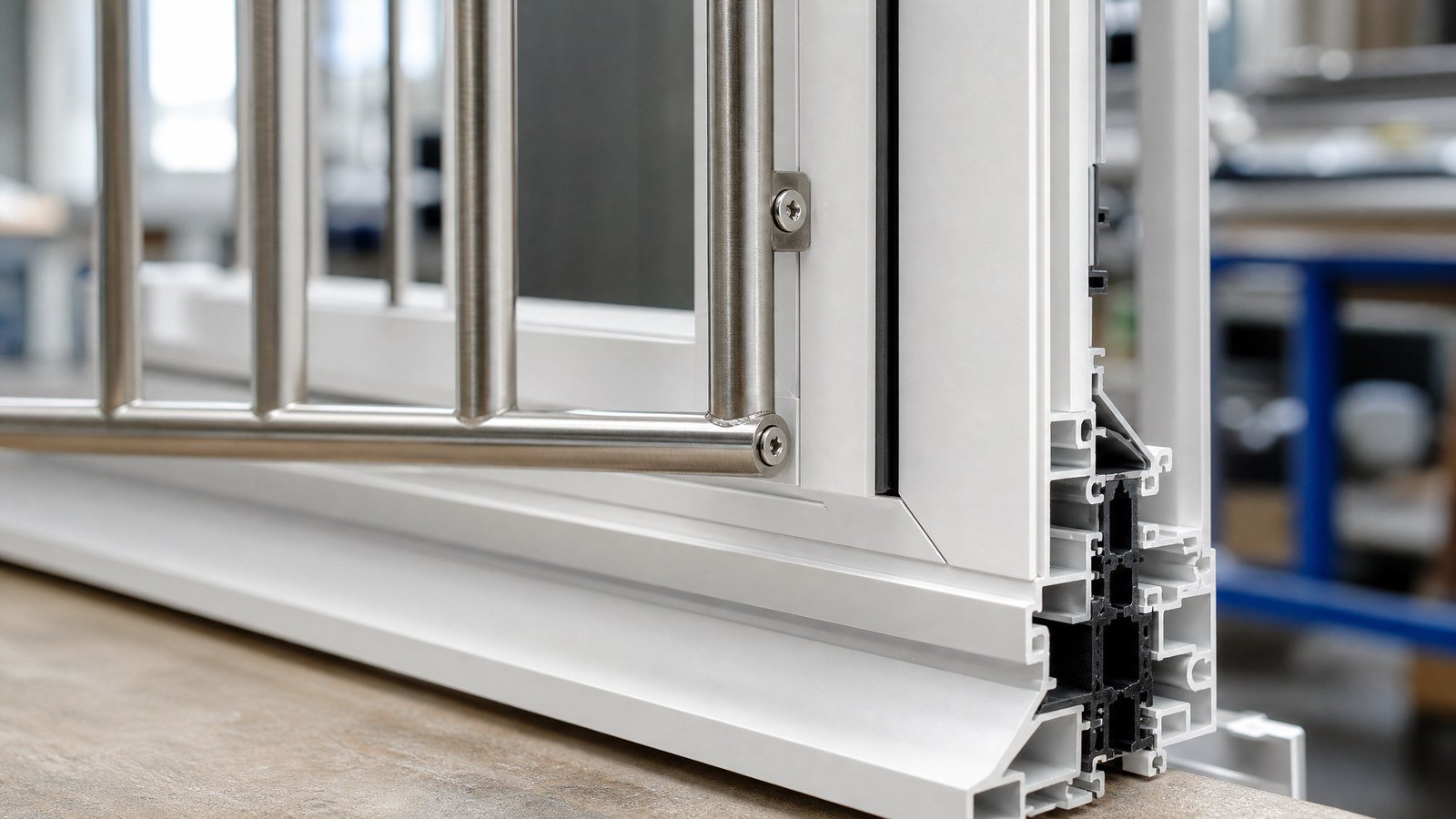
The frame-integrated grille is the bar that is designed into the aluminium frame at the factory: the section is extruded or the fixing line is set out so the grille sits as part of the window unit, in the frame colour or in the stainless line the drawing calls for, with the opening designed around the bar rather than the bar fitted around the opening. The factory line answers the three retrofit costs in one move. The fixing is an engineered line inside the section instead of a bolt into a finished face; the colour is the powder coat or the anodise that matches the frame, or the polished bar that the drawing states; and the sightline is set by the bar profile the section carries, from the full grille down to the slim clear bar. The unit that ships is the unit that is tested, and the SANS 613 structural line that the window carries is the line the grille ships inside, with the test report issued per order and per model against the configured unit.
The integrated line is the one the importing schedule can state as a single item: the aluminium window, the bar, the glazing, and the hardware as one unit with one document pack. On a retrofit job the steel line still wins, and the honest schedule says so per opening class. On a new window the integrated line is the one that keeps the security column and the frame column on the same drawing, and it is the one this article is written for.
The two bar lines on the same schedule
| Line | Steel retrofit bars | Frame-integrated grille |
|---|---|---|
| Fixing | Bolted or clipped to the frame on site, after the window is fitted | Engineered fixing line inside the section, set at the factory |
| Finish | Standard paint line in the trade colours | The frame powder coat or anodise, or the polished clear bar |
| Sightline | Set by the fabricator profile | Set by the bar profile the section carries, down to the clear line |
| Opening | The sash is fitted to clear the bar, or stops at it | The opening is designed around the bar in the frame drawing |
| Glazing line | Independent of the glazing spec | Specified with the laminated build as one unit |
| Structural line | The bar load is the fabricator certificate | Part of the SANS 613 configuration, report per order and per model |
| Maintenance | Weld points and the paint line | The anodise or powder line; no paint to maintain |
| Document line | The fabricator certificate per job | The test report issued per order and per model, against the configured unit |
Clear burglar bars: the sightline
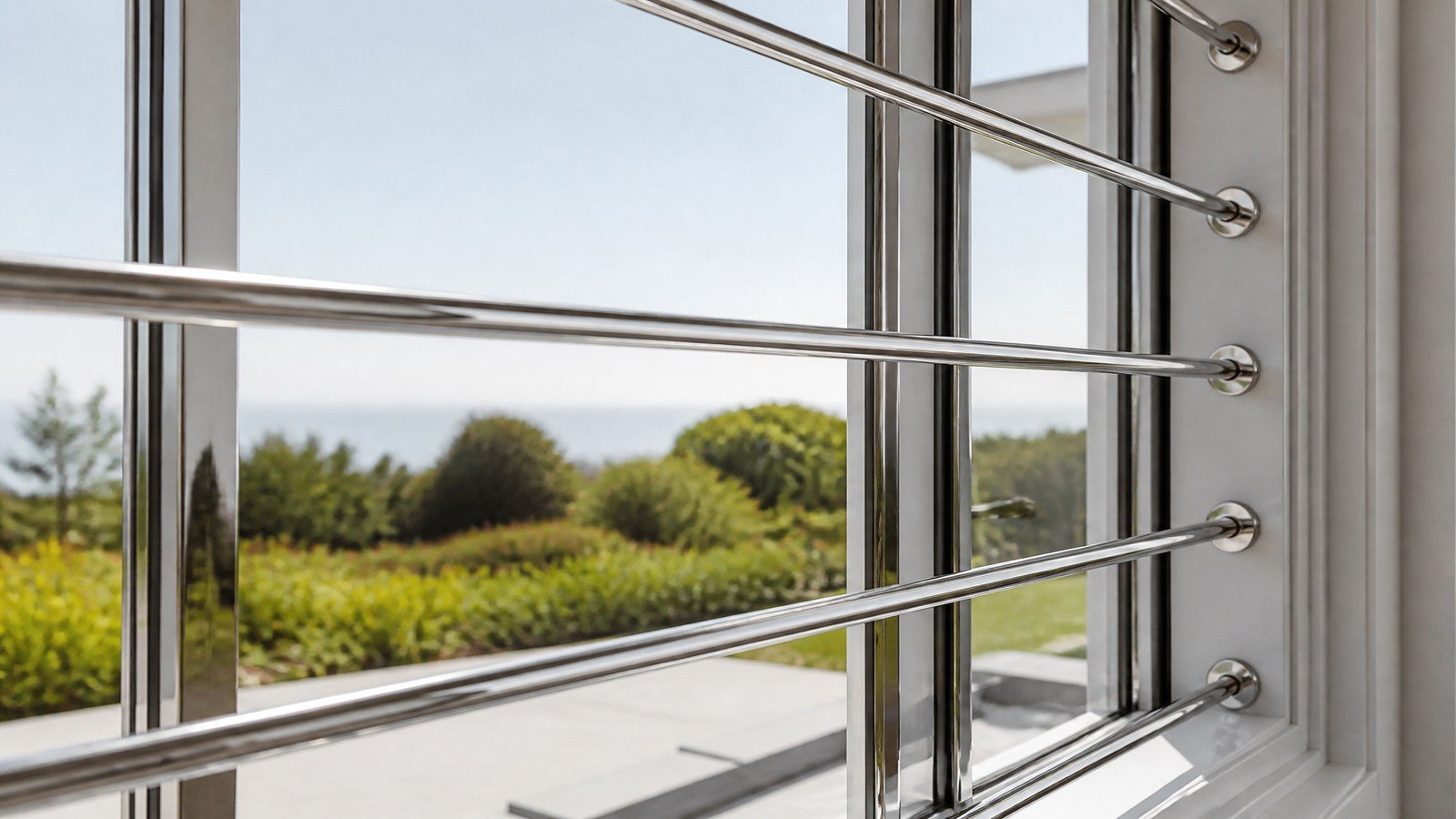
The clear burglar bar is the sightline argument inside the security category: the slim polished stainless bar that carries the same function as the full grille and asks less of the view, the light, and the facade line. The category is established in the South African market — the polished clear bar fitted to the aluminium window is a named product line in the Johannesburg trade, and the conversion story is the common one: the homeowner who replaces an older window with the aluminium unit and carries the security requirement forward without the visual weight of the first-generation bars. The sightline is the reason the bar profile, the finish, and the fixing detail are specified as part of the frame drawing rather than chosen on site.
The coastal reading of the clear line is the finish line: the polished stainless that carries the salt air without the paint system the painted bar depends on, and the fixture that the coastal UV and the salt both test. The sightline is the argument the clear bar makes, but the schedule still carries the same three lines behind it — the glazing line, the hardware line, and the document line — and the slim bar does not remove any of them.
What the bars do not replace: the glazing line
The bar line and the glass line are two columns of the same security schedule, and the one does not cover the other. The burglar bar stops the opening; it does not stop the pane. The glazing that the security schedule states is the laminated line per SANS 1263-1 — the interlayer that holds the glass together when it is struck — specified against the SANS 10400-N trigger zones, where the opening is accessible and the floor is ground level, and the hardware line that both the bar and the glass fix to. The three layers are the argument: the bar delays the opening, the laminated lite holds the plane, and the multipoint hardware keeps both in the frame. A schedule that states the bar line and leaves the glazing column to the standard single pane has written one line of a three-line defence.
The handoff is deliberate: the glazing side of the security schedule — the laminated build, the 10400-N trigger zones, the solar line that rides on the same lite — is the subject of the security glazing article on this site, and this piece carries only the bar line that the frame ships with.
The import decision: bars shipped with the frame
The import line is where the frame-integrated call becomes a logistics line. The unit that ships with the grille fitted is the unit that arrives as the finished security window — the crating is built around the combined depth, the bar and the frame cross the same customs line, and the document pack is the one pack the tender answers. The alternative is the split line: the window ships without the bar and the bar is fitted on site, which keeps the container slimmer and leaves the bar to the local trade — the same trade that carries the retrofit line — and the schedule has to say which line it is specifying, per opening class, before the container is booked.
The wind line is the column the bars touch on the import side: the SANS 10160-3 wind action that the competent person determines for the fenestration is the load the configured unit carries, and the grille the frame ships with is part of the configuration the report references, issued per order and per model. The Cape Town and the Durban routes run the same 28 to 33 day and 25 to 30 day windows the aluminium unit already carries, and the crating the transhipment handling needs is the crating the combined unit is built around.
Where the steel line still wins
The concessions run the way they ran on the material call, and they run further. The retrofit line wins on the existing stock — the window that is already in the wall, of any frame, is the majority of the South African housing line, and the bar that fits the opening on site is the security that stock gets, now rather than at the replacement. The local fabrication line wins on the irregular opening that the standard section does not carry, and the welded grille to the odd dimension is a job the factory line does not quote. The DIY steel set wins on the budget line that the owner fits and refits as the house moves. None of these is a failure of the integrated line; they are the jobs the retrofit exists for, and the schedule that states the integrated grille on a new aluminium window and the steel retrofit on the existing one is the schedule that has run both lines honestly.
How to write the security column in the schedule
The way the security column survives the tender is the way every other column survives it: stated against the standard, against the configured unit, and against the report that references the unit. The schedule names the bar material and the finish — the steel retrofit in its stated colour, or the integrated grille in the frame finish or the polished clear line — the fixing line, the opening behaviour past the bar, and the glazing column it works with, and the document pack closes with the report issued per order and per model. The list below is the security column the factory and the fabricator both answer:
- The bar line per opening class: steel retrofit or frame-integrated, the material, the finish, and the profile the drawing states.
- The fixing line: the bolt or the clip on the retrofit, the engineered fixing on the integrated unit, named rather than assumed.
- The opening behaviour: which sashes clear the bar, which stop at it, and the service line the grille leaves for the glass.
- The glazing column: the laminated build per SANS 1263-1 against the SANS 10400-N trigger zones, stated per opening class.
- The hardware line: the multipoint set the bar and the glass both fix to, on the same column.
- The wind configuration: the unit the SANS 10160-3 determination carries, with the grille as part of the configuration.
- The delivery line: the route — Cape Town or Durban — and the crating the combined unit needs.
- The document pack: the SANS 613 test line and the report per order and per model, so the bar that ships is the bar the project closes with.
Frequently Asked Questions
Do aluminium windows need burglar bars in South Africa?
The schedule says, not the frame material. The ground floor opening, the accessible ground floor per the SANS 10400-N trigger zones, and the housebreaking line the Stats SA survey puts at 1.5 million incidents a year all point the same way: the bar is the standard security layer on the South African residential window, and the aluminium frame is no exception. The column states the bar line per opening class, and the class that is open to the street is the class that carries it.
Can burglar bars be fitted to aluminium windows?
Yes, on both lines. The steel retrofit bolts or clips to the aluminium frame after it is fitted, the way it fits the timber and the steel, and the frame-integrated grille ships with the window as one unit, in the frame finish or the polished clear line. The retrofit is the answer for the window that is already on the wall; the integrated line is the answer when the window is being specified, and it is the line the drawing can test as one configured unit.
What are clear burglar bars?
The clear bar is the sightline line inside the security category: the slim polished stainless bar that carries the full function with the minimum visual weight. The category is established in the South African trade, fitted to the aluminium window as a named product line, and the coastal reading is the finish line — the polished stainless that carries the salt air without the paint system the painted bar depends on.
Do burglar bars replace laminated glass?
They do not; they are two columns of the same defence. The bar delays the opening, the laminated lite per SANS 1263-1 holds the plane when it is struck, and the multipoint hardware keeps both in the frame. A security schedule that states the bar and leaves the glazing to the standard single pane has written one line of a three-line defence, and the 10400-N trigger zones are where the glazing column becomes mandatory rather than recommended.
Can burglar bars ship with imported aluminium windows?
Yes, on the integrated line. The unit ships with the grille fitted — the crating is built around the combined depth, the bar crosses the same customs line as the frame, and the document pack is the one pack the tender answers. The split line is the alternative: the window ships clean and the local trade fits the bar, and the schedule states which line it is specifying per opening class before the container is booked.
What does the security column of the schedule state?
The bar material and the finish, the fixing line, the opening behaviour past the bar, the glazing column it works with, the hardware set, the wind configuration the report references, and the delivery and crating line. The document pack closes with the SANS 613 test line and the report issued per order and per model, so the bar that ships is the bar the project closes with.