
Certifications & test standards
Performance is claimed by test, not by adjective. The tables below are the standards our ranges are configured against; project reports travel with the shop drawing package.
The documents, not the claims
A consultant does not take a brochure on trust — they open the report. These are the documents behind the figures on this site: accredited-laboratory test reports and certificates issued against configured models, naming the laboratory, the series tested and the values actually measured. Each is referenced to the model on the order, and a copy travels with the document pack.
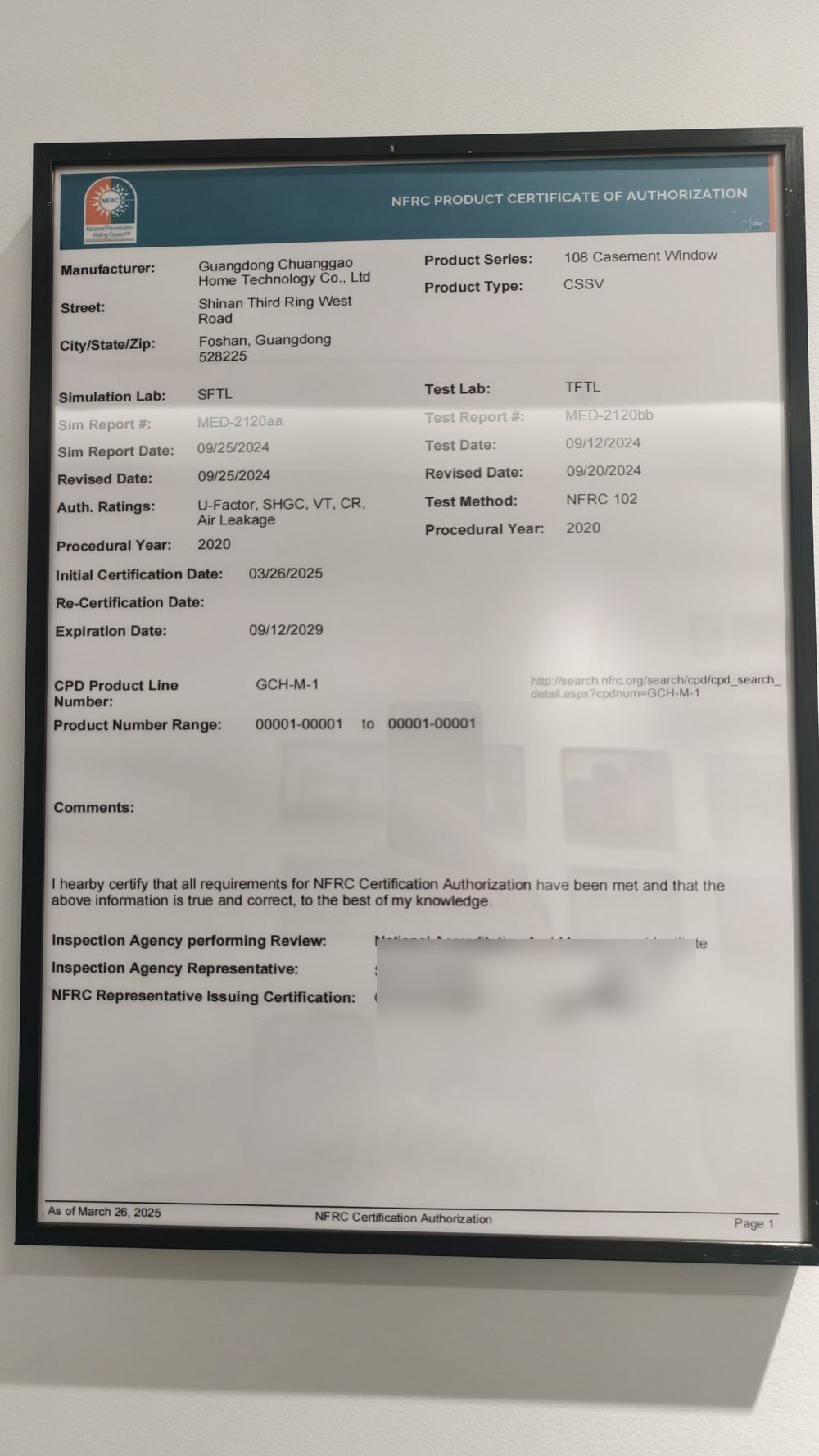
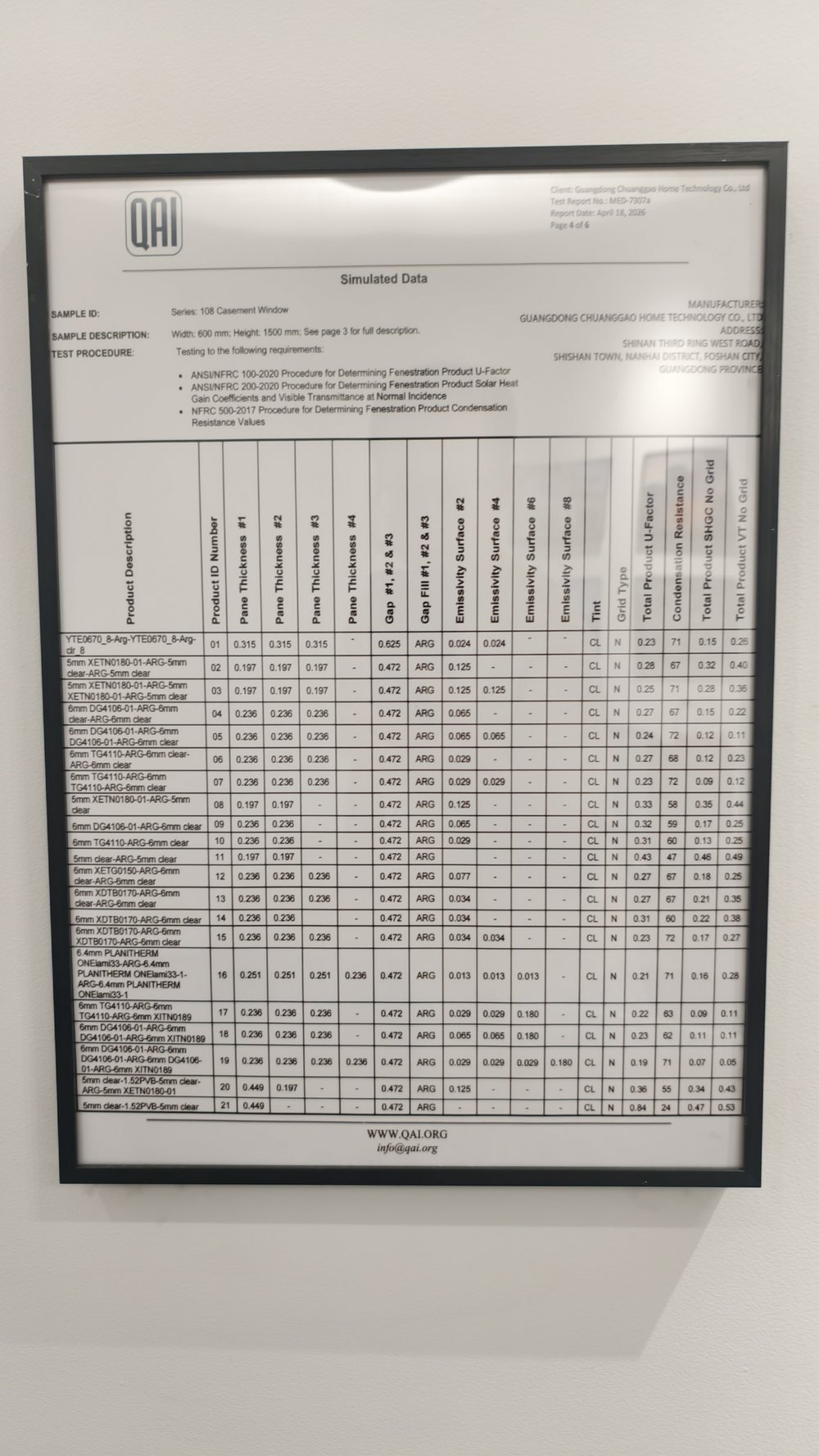
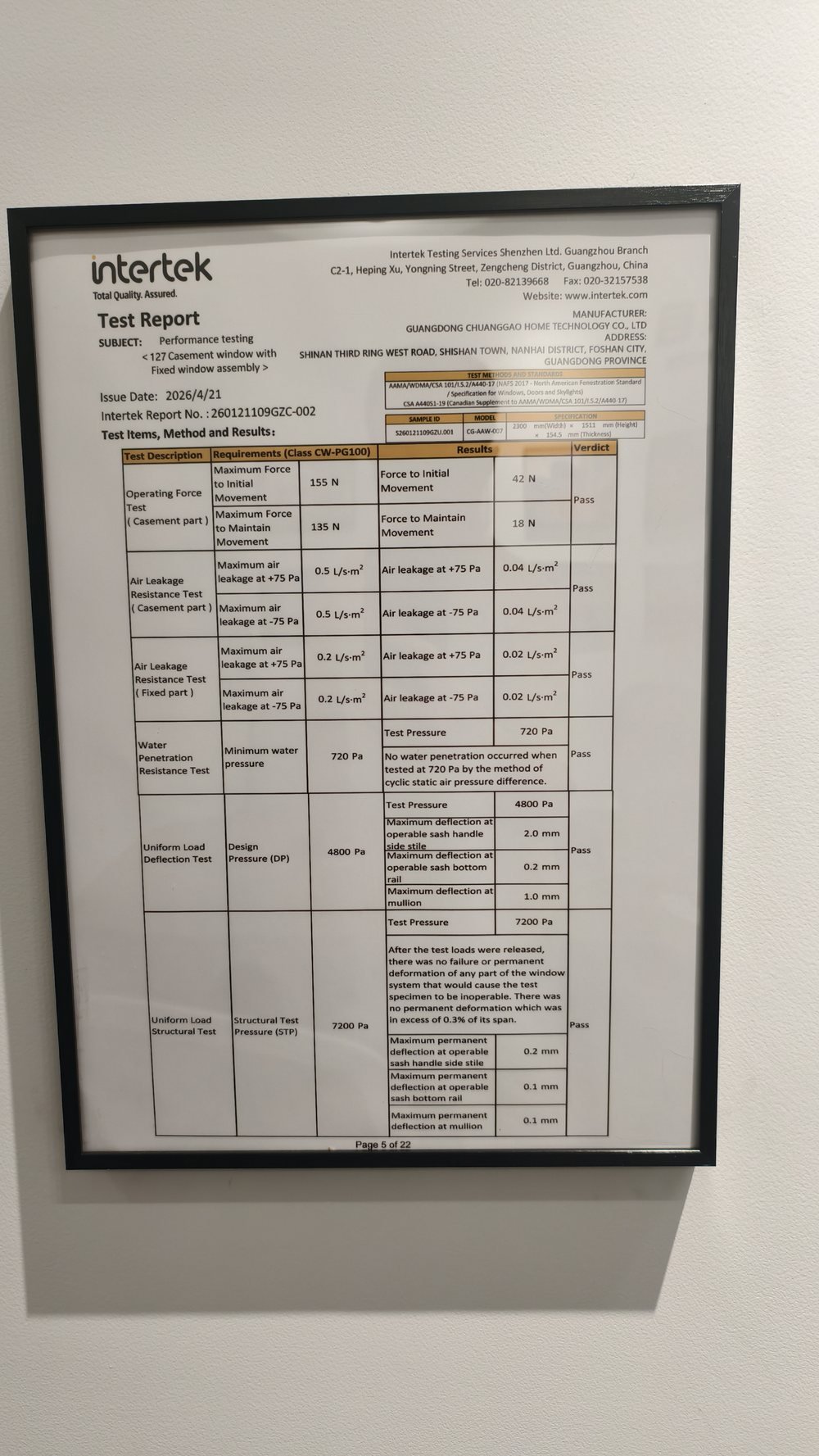


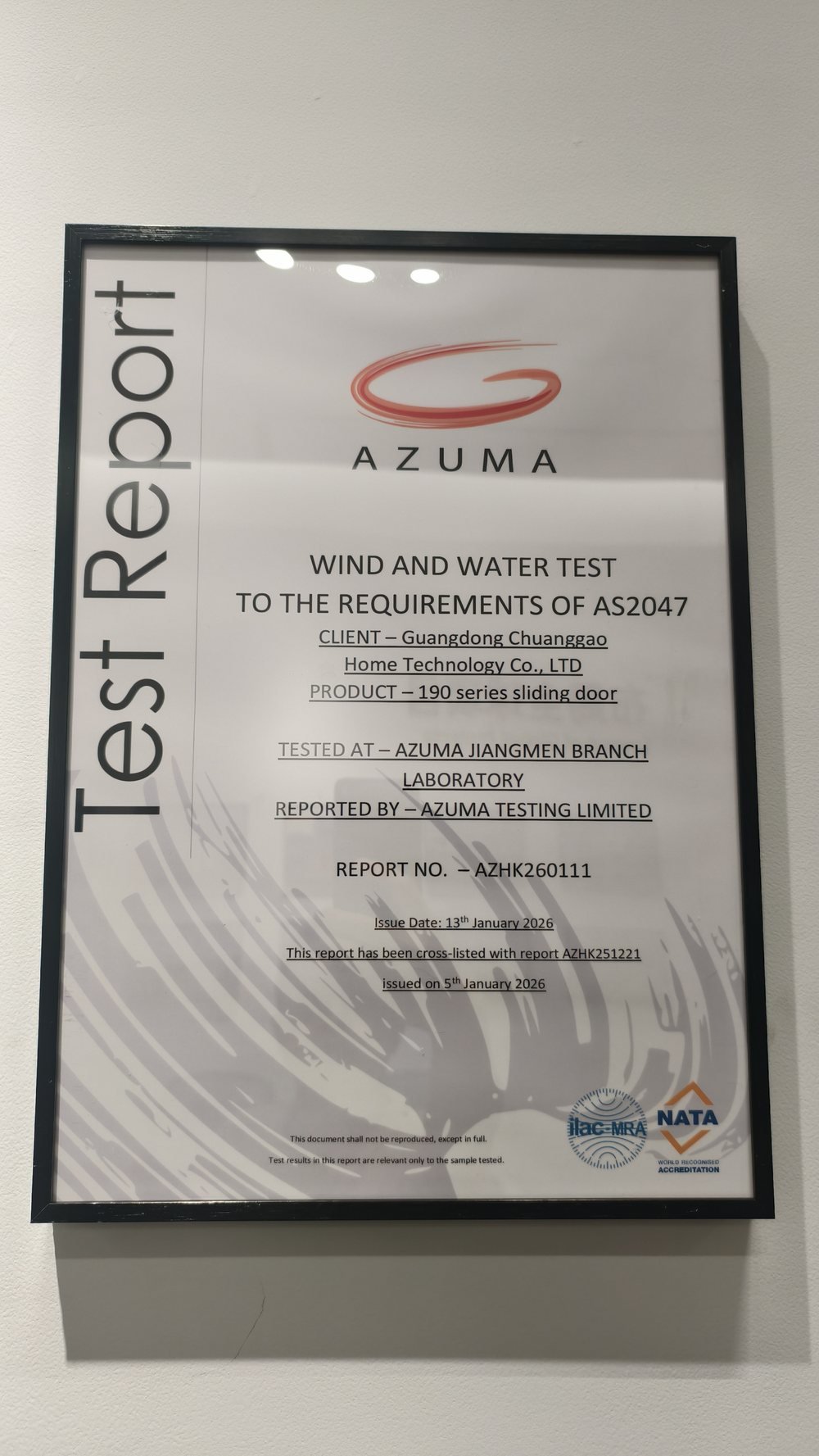
Reports are issued per configured model and per order — the values on the document that ships with your container are the ones measured on your configuration, not a standing listing.
Test standards by market
North American entries are written in the NFRC code system — product type, frame, break, gas fill, tint and spacer — and a certified figure is only checkable once those codes are read. The eight NFRC code tables decode a CPD entry and a label field by field. The glass is the part of the build that moves most and is specified least precisely — the published coating, gas and spacer values are set out separately, each on the build the manufacturer calculated it for.
How a project gets tested
Configure
The drawing office configures every project against the standard of the destination market — EN for European-spec schedules, AAMA/ASTM for the US, AS for Australia, SANS for South Africa.
Test
The configured unit is tested at an accredited laboratory — PGT or equivalent for Miami-Dade / FBC listings, NATA-accredited labs for Australian wind and impact cases — on the exact model that will be produced.
Document
The test report and certificate are referenced to the configured models on the order, included in the document pack, and shipped with the first container. The drawing office keeps the configuration locked from test through production.
US projects are listed through PGT or an equivalent laboratory for Miami-Dade / FBC approval; Australian projects are coordinated with NATA-accredited labs; South African projects run the SANS 10400-N schedule — the safety, energy, glazing-assembly, installation and balustrade-load lines named in one column — while the rest of Africa and South-East Asia follow the local standard of record. The relevant report and declaration are included in the document pack for each shipment.
Factory inspection runs on request — on site in Foshan or as a remote video walk — at any point before shipment, with the pre-shipment photo report as the baseline either way.
Certification questions
Do you hold ISO 9001 or CE certification?
No held-certification claim is made. Performance is documented per project instead: the configured unit is tested at an accredited laboratory and the report references the models on that order — the document a consultant, an AHJ or an insurer can actually check.
What travels with a shipment?
The test report and declaration for the configured models, the shop drawing set with the drawing-status note, the hardware and glass schedules, and a packing list per crate keyed to the drawing sheet.
Which laboratory runs the testing?
PGT or an equivalent laboratory for US listings, NATA-accredited labs for Australian wind and impact cases; other markets test to the standard of record, with the report issued per order.
Can we inspect before shipment?
On request — on site in Foshan or as a remote video walk — at any point before shipment, with the pre-shipment photo report as the baseline either way.