
Logistics
Importing aluminium windows from China: a buyer guide
Importing aluminium windows from China is a sequence of five decisions, and each one locks the next: what the unit has to prove, what it is made of, how it travels, what it costs to land, and who is standing on site when the crate opens. This guide walks the sequence and points to the detailed piece behind each step.
The importing collection
Sourcing and price
Packing and the site
Importing aluminium windows: the five decisions, in order
The order matters because the later answers are constrained by the earlier ones. A performance claim decides the glass, the glass decides the weight, the weight decides the crate, the crate decides the container, and the container decides the date. Read backwards, an order that went wrong usually shows the failure at the last step and the cause at the first.
Every piece in the collection above belongs to one of those five decisions. What follows is the short version of each, in the order the decisions are actually made. That is why importing aluminium windows works as a sequence and not as a checklist.
A quotation without a specification is not a price
Two factories can quote the same double glazed aluminium window and be far apart, because the words hide four variables: the profile series and its wall thickness, the glass build, the hardware set, and the finish. A 5 mm pane and a 6 mm pane with a different cavity and a different coating are different products at different prices.
The practical rule is to send one schedule, in one format, to every factory you ask: the same sizes, the same glass build, the same hardware, the same finish, the same packing. Then the numbers are comparable, and the cheapest one is a real answer to a real question.
The size mix is part of the specification, because glass is cut from a stock sheet and the offcuts are paid for either as a smaller pane on the same order or as waste inside the rate. A schedule of nine slightly different widths often costs more than a schedule of four widths repeated, for the same total area.
What a factory can prove, and what it cannot
A factory tests configurations, not catalogues. The report you need is the one that covers the exact unit on your order: the same profile, the same glass make-up, the same size class, the same hardware, the same operation. A report for a smaller unit in the same series does not prove the large one, and this is where a surprising number of imported jobs fail inspection.
The standards differ by destination. Europe and the UK work through EN 14351-1. North America works through NAFS, which for Canada means the CSA A440S1 supplement, and a US report without that supplement does not qualify a product for Canada. Australia works through AS 2047, with AS 1288 governing the glass. Ask for the report that names your configuration and the standard your market enforces.
On testing cost, the honest arrangement is that the factory pays for the test of a configuration it wants to sell, and the buyer pays nothing until the order exists. What a buyer should not accept is a certificate with no configuration on it, or a report issued for a different thickness and a different span, presented as if it covered the schedule.
The documents a window order travels with
| Document | Who issues it | What it settles |
|---|---|---|
| Proforma invoice | Factory | What is offered, on what term, before payment |
| Commercial invoice and packing list | Factory | What was sold, and what sits in each crate |
| Bill of lading | Carrier | What was loaded, and who may claim it at destination |
| Test report for the configuration | Accredited laboratory | Whether the unit meets the standard the market enforces |
| Certificate of origin | Chamber of commerce | Which duty rate and which trade measure apply |
| Insurance certificate | Insurer | Which risks are covered, under which clause |
FOB, CIF or DDP
The trade term decides where your risk starts, not only who pays the freight. FOB a Chinese port means the seller delivers to the vessel and the sea belongs to you. CIF adds freight and insurance to the destination port, while the risk still changes hands at loading. DDP puts the duty and the last mile on the seller, which is convenient on a trial and opaque on a repeat order.
Whichever term you choose, the Incoterms version has to be on the quotation, and the insurance line has to name the clause, not say insurance included. The clause is the difference between a covered loss and an argument.
Lead time is mostly not assembly
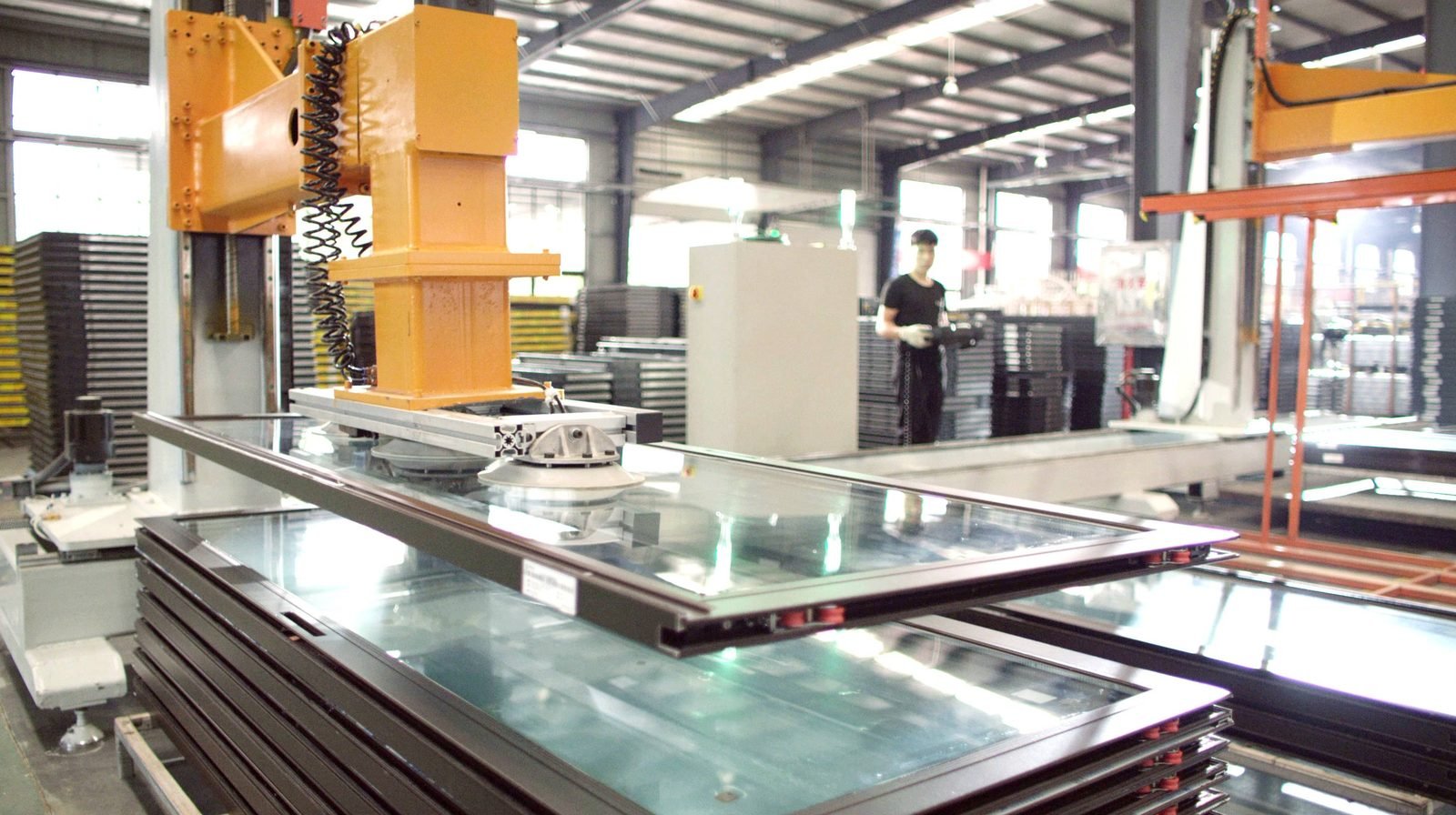
Quoted lead times of 30 to 55 days are normal, and most of that is not putting the unit together. The sequence is approval of the shop drawings, extrusion and powder coating, glass tempering or lamination, assembly and glazing, quality control, packing, and the booking. Powder coating and laminated glass are the two steps that move the date, because both run in batches and both queue behind other orders.
The number worth asking for is the working days from drawing approval to the container being loaded, with the holidays of the factory region stated. A date given at enquiry is a guess; a date given from the approved drawing is a commitment.
Booking is the quiet variable. In the weeks before a major holiday the sailing schedule tightens, the container is ready and the vessel is full, and the order waits at the port rather than at the factory. A buyer who plans the site around a loading date and not a sailing date has planned half the job.

The crate is the unit of shipping
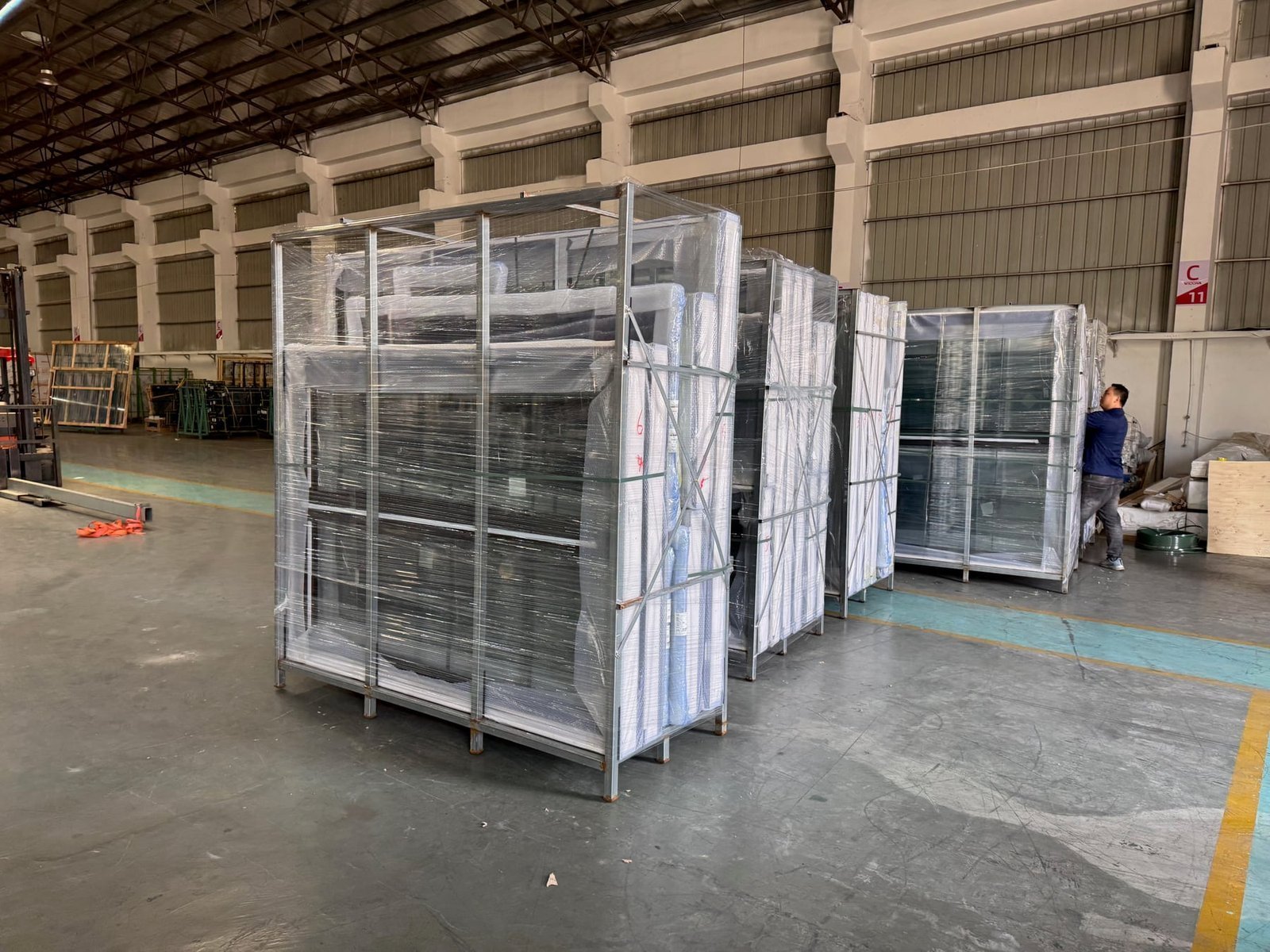
Assembled sashes travel crated, flat frames travel stacked, and the difference shows up in the container count. The count comes from the crate sizes for the actual schedule, not from an average, and the loading report issued at the dock is the document the receiving yard works from.
Two documents do the work: the packing list, keyed to the drawing sheet, and the loading report, one per container. If a lite arrives damaged, the claim runs on whether the crate was recorded at the bay before the doors closed, and on whether the packing list and the bill of lading count the same crates.
Weight arrives before volume on a glazed schedule. A 40 foot box takes roughly 28,700 kg of payload, and a crate of laminated units reaches that line while the box still looks half empty. The loading plan is a weight calculation as much as a space calculation.

Duty, tax and the classification question
Duty is set by origin, by the tariff line and by the destination, and the line is decided by your broker, not by the factory. Two things are worth knowing before a job is priced. First, the tariff line for a finished window is not the line for an aluminium extrusion, and the difference matters wherever anti-dumping measures apply to extrusions. Second, several markets run anti-dumping and countervailing measures on Chinese aluminium products, and Canada is one of them, with measures in force on certain extrusions.
The safe habit is to ask the broker for the classification and the duty rate in writing before the order is released, and to keep that answer in the file. A landed cost built on a guessed tariff line is the most common way a good order turns into a bad one.
Choosing the factory: seven checks
- Which profiles are extruded in house and which are bought in, checked against the line card.
- Which laboratory tested the configuration, and what the report number is.
- The last three orders of the same system, with their crate counts.
- Who supplies the glass, and whether the sealed unit is assembled on the same site.
- The packing standard for a sea container, evidenced by a photograph of the last one loaded.
- Who signs the quality report, and what it actually lists.
- What happens on a claim: who inspects, who pays, and on what evidence.
Sample, trial, repeat
A sample proves the finish and the hardware. It does not prove the packing, the paperwork or the loading. The trial order is where a buyer learns whether the crate arrives as described and whether the invoice matches the packing list. The repeat order is where the price becomes real, because the tooling and the drawings are already approved. Most of what goes wrong when importing aluminium windows goes wrong at one of those two later steps.
Treat each stage as a test of a different thing, and do not skip the middle one to save a month. The cost of a bad first container is a season, not an invoice.
What goes wrong most often
- The drawing drifts between quotation and approval, and nobody re-checks the glass build.
- The glass is substituted to a cheaper make-up after the order, and the performance claim quietly stops being true.
- The finish differs between batches, because the powder lot changed between the sample and the run.
- The crate count and the packing list disagree, and the claim arrives after the crane has left.
- The test report covers a different size, and the inspector asks for the one that covers this one.
Frequently Asked Questions
Is importing aluminium windows from China cheaper?
It can be, on the same specification, because the profile, the glass and the assembly are made in one place and the labour cost is lower. The comparison only holds when both quotes describe the same glass build, hardware, finish and packing. On different specifications the number means nothing.
What certificate should a buyer ask for?
The report for the exact configuration on the order, tested to the standard the destination enforces: EN 14351-1 for Europe and the UK, NAFS with the CSA A440S1 supplement for Canada, AS 2047 with AS 1288 for Australia. A certificate that does not name the configuration proves nothing about the unit being bought.
Which Incoterm suits a first order?
DDP removes the surprises on a trial, at the cost of an opaque duty line. FOB keeps the freight visible and is easier to compare between suppliers. Either works when the Incoterms version, the insurance clause and the delivery point are written on the quotation.
How long does a first order take?
Allow 30 to 55 days from drawing approval to loading, depending on the finish and the glass, plus the ocean transit. Powder coating and laminated glass move the date, because both run in batches behind other orders.
Can the factory ship assembled windows?
Yes, and assembled sashes are the normal route for a project with a site programme. They load less densely than flat frames, so the container count is higher, and the site saves the glazing and hanging labour.
Who decides the duty rate?
A customs broker, on the tariff line and the origin rule that apply in the destination market. Anti-dumping and countervailing measures exist on aluminium products in several markets, so the classification should be confirmed in writing before the order is released.
What happens when a unit arrives damaged?
The claim runs on the loading report and the photo record taken at the dock, reconciled against the packing list. That is why the loading report is issued per container before the doors close, and why the receiving yard checks it before unloading.