
Logistics
Window distributor terms: what the agreement covers
A window distributor is not buying a different product. The factory, the systems and the test reports are the ones a project buyer gets. What changes is the packaging: an order specified once and rebuilt on the next one, service kits and spares pre-allocated per unit, freight planned against container counts, not square metres, and warranty schedules written into a contract, not a brochure. This piece sets out what the programme contains, which numbers are commitments and which are targets, and which questions have to be settled in writing before the first order.
What a window distributor is actually buying
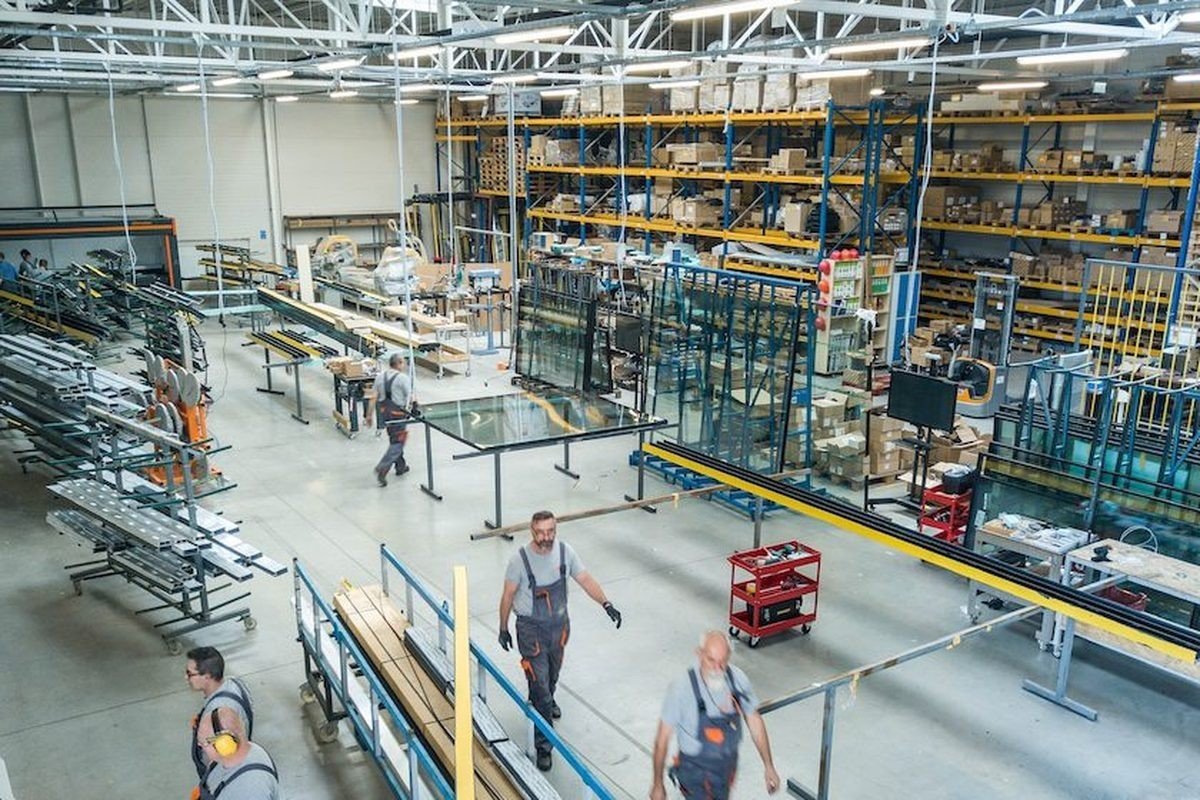
The wholesale line is the factory-direct line. Twenty aluminium systems sit on one thermal-break platform — windows, doors and glass spaces — quoted by a single drawing office. There is no trading company between the drawing office and the counter, which is why the quotation is the price the installer prices against.
The division of work is the part worth understanding before an application. The window distributor keeps the relationship with the installers and the end customer: the specification, the site, and the warranty conversation at the counter. The factory takes the drawing work, the hardware and glass schedules, the production slot, the crating and the documents. Nothing in that list requires a distributor to hold technical staff.
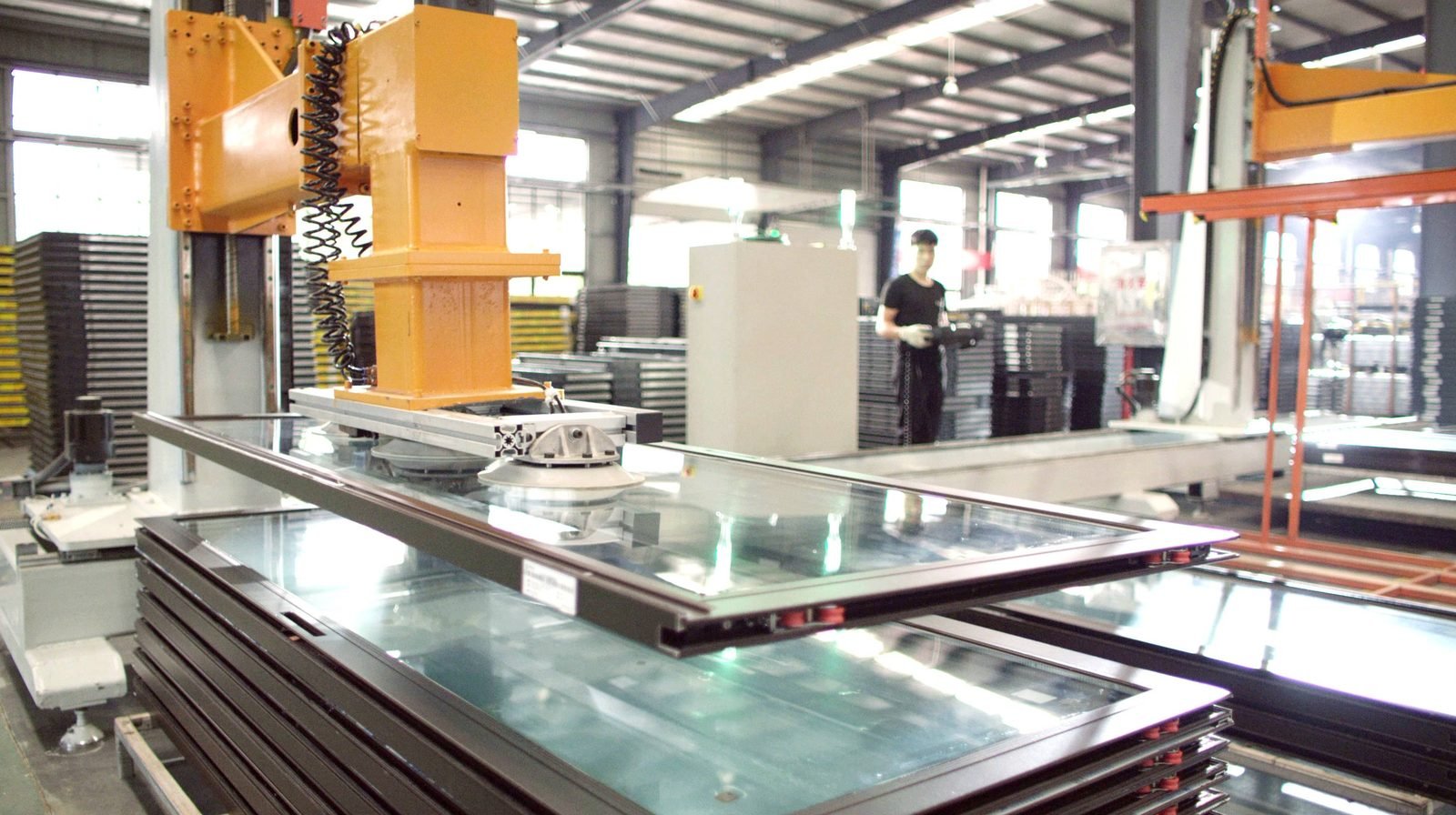
The product is not a distributor grade. The same profiles, the same hardware and the same factory-assembled, pre-glazed sashes that leave the line for a villa project leave it for a dealer order. A test report written for one is the test report for the other.
A package that repeats
A dealer order is specified once and rebuilt on the next one: the same systems, the same hardware schedule, the same finish allocation, the same crate layout. Nothing is re-decided at the second order, and that is the commercial point — the second order costs the drawing office an afternoon instead of a week.
The contrast is a one-off project order, where every job is specified from scratch and the drawings are the deliverable. On this line the specification is bought once, and then production slots are bought. Where the range is fixed, the quotation becomes a rate card against a known build.
What repeats is written down. The hardware schedule per system, the glass schedule, the finish allocation and the crate layout all sit in the order file, so a repeat order is a confirmation, not a negotiation.
Counted in containers, not square metres
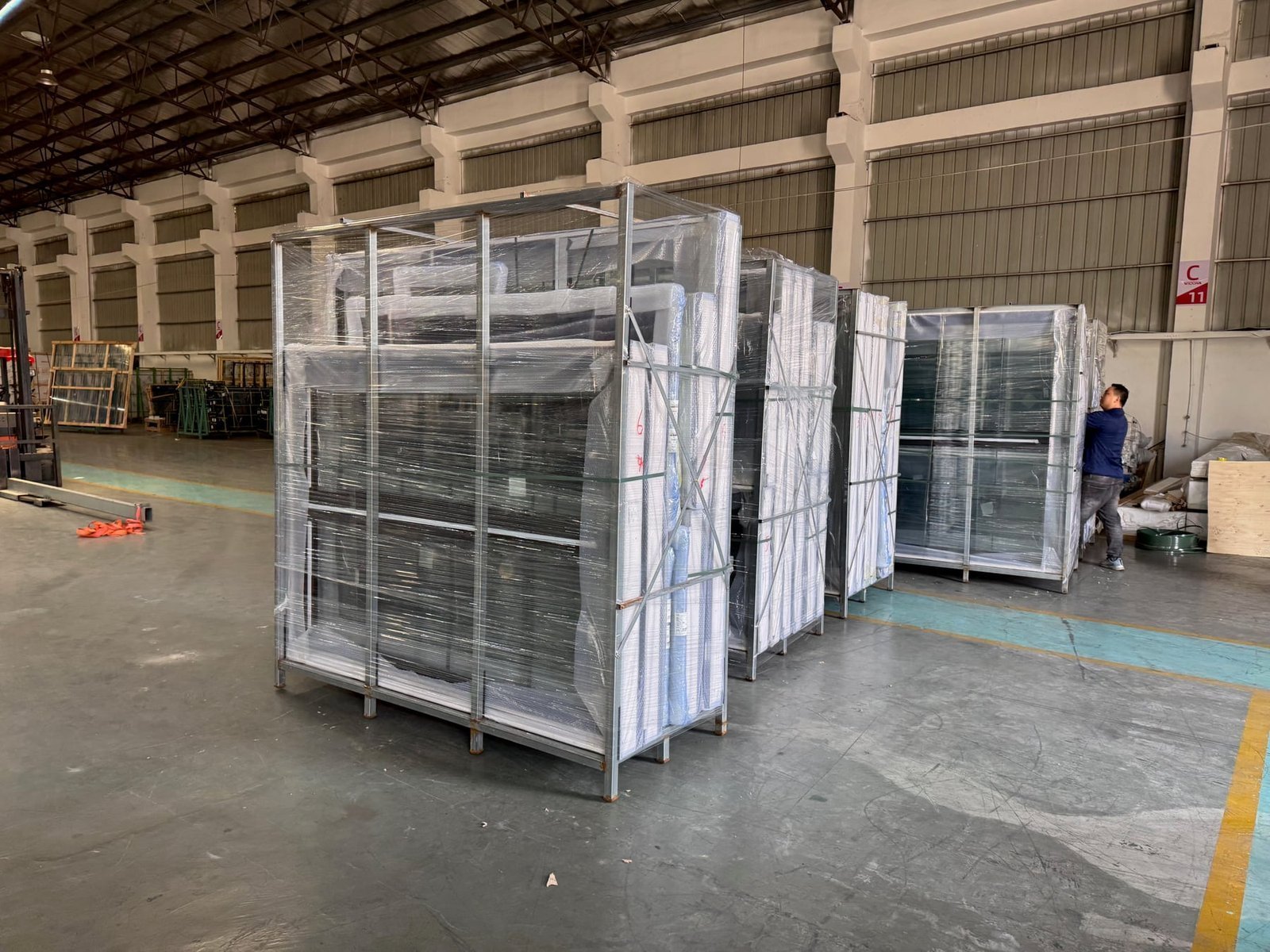
Freight is bought per 40HQ container, so the order is planned against container counts, not square metres. Crates are built per range and consolidated across ranges where the schedule allows, which is how a mixed dealer order fills a container instead of leaving air in it.
Each container ships with a loading report: photographs of what actually went in, crate by crate. That report is the document that settles a short-shipment claim, and it is the reason the order is counted in units and crates instead of area.
For a distributor this changes the order-size arithmetic. The useful unit is not the square metre of glazing but the number of units that fit a container once the crate layout is fixed, because that is the number the freight rate is applied to.

What the programme states, and the document that proves it
| Item | What the programme states | The document that proves it |
|---|---|---|
| Order quantity | No square-metre minimum on villa and boutique work; multi-unit scales with the range | Quotation, quoting both together |
| Quotation | Unit by unit, within 24 hours of a complete inquiry | Commercial quotation with lead time, payment schedule and port options |
| Shop drawings | Free, within 3 working days of approved architectural drawings | Fabrication drawings with hardware schedule, glass schedule and fixing details |
| Production | 30 to 40 days on a standard schedule; 35 to 50 days on the solar-control schedule | Production slot confirmed on the quotation |
| Freight | FOB, CIF or DDP with 40HQ consolidation across ranges | Loading report with photographs, per container |
| Warranty | 15-year frame, 5-year hardware and gasket, glass manufacturer warranty passed through | Contract schedule naming the party behind each one |
| Private label | Available on the volume ranges | Label, documentation set and packing marks agreed before the first run |
| Territory | Discussed case by case | Written framework stating how the channel works in that market |
The two clocks: quotation and drawings
The first clock is commercial. A complete commercial quotation, unit by unit, goes back within 24 hours of a complete inquiry, with the lead time, the payment schedule and the port options on it. An incomplete inquiry does not start the clock, which is why the inquiry asks for drawings or a window schedule rather than a description.
The second clock is technical. Shop drawings and fabrication drawings are produced free of charge within 3 working days of approved architectural drawings, and they carry the hardware schedule, the glass schedule and the fixing details. The confirmation step matters: the drawings are approved before anything is cut.
Physical samples follow the quotation. Sample chips of the twelve standard finishes ship with a quotation at no charge, so the colour decision happens on site, not in a PDF. The anodised range runs 15 to 20 µm; the powder range is a two-coat system at 80 µm, with a salt-fog schedule available for coastal projects.

Production, and where the calendar goes
Factory-assembled, pre-glazed sashes leave the line in 30 to 40 days on a standard schedule. The solar-control laminated schedule runs longer, 35 to 50 days, because the interlayer and the coating both sit in the critical path. A quoted lead time is the schedule the quotation names, not the fastest one the line has ever achieved.
Then the sea leg. A typical ocean leg from the consolidation port runs 25 to 33 days, and it is the part of the calendar a distributor cannot compress. Working backwards from a site date, the honest number is production plus sea leg plus the last mile, and a programme that leaves less than that is a programme that will be argued about.
Before the container closes, a pre-shipment inspection runs with a photo report. The balance falls due against that report, which puts the inspection where it belongs: before the goods leave rather than after they arrive.
Warranty, stated the way the contract states it
The standard schedule is a 15-year frame warranty, a 5-year hardware and gasket warranty, and the glass manufacturer warranty passed through. Project-specific extensions are written into the contract in the same place. The precision matters, because the three schedules have three different holders, and a distributor passing cover to a customer needs to know which is which.
The frame warranty sits with the factory. The hardware and gasket schedule is shorter because those are the wear items. The glass warranty belongs to the glass manufacturer and is passed through, which means the named party behind it is the manufacturer, not the assembler.
On a dealer programme the point is that the schedules are contractual and written into the order. The installer hands the homeowner a schedule with a named party behind it — the same one that manufactured the unit.
Private label and OEM: what gets agreed first
Private-label and OEM supply is available on the volume ranges. The label, the documentation set and the packing marks are agreed before the first production run, never after it, which is what keeps the paperwork from changing mid-stream.
Three things move with a private-label order: the label itself, the documentation set that ships with the crates, and the packing marks the receiving warehouse reads. All three sit in the order file before production, and none of them is a change request later.
What does not move is the product. The platform, the test reports and the warranty holder stay the factory ones; only the name on the crate and the cover of the document set change.
Territory, and what is not promised
Territory is discussed case by case and is not granted automatically. What is committed is a written framework that states how the channel works in the market — which is a different thing from an exclusivity clause, and a distributor weighing an application should read it as one.
The reason is structural. A factory selling into forty markets cannot promise one distributor the whole of one of them without knowing the volume behind it. The framework states the channel, the volume expectation and the support, agreed in advance instead of argued afterwards.
What a distributor can insist on is the framework in writing before the first order. What a distributor should not expect is a territory promise attached to an application form.
What to ask for before the first order
Read from the other side of the counter, none of this is a special negotiation. It is the same commercial page a project buyer gets. A window distributor that has those seven documents in hand knows what the partnership is; the ones still missing are the ones worth settling before the first order.
- The written channel framework for the market, stating territory, volume expectation and support.
- The warranty schedules as they will appear in the contract: 15-year frame, 5-year hardware and gasket, and the glass manufacturer schedule passed through.
- A unit-by-unit quotation naming the lead time, the payment schedule and the port options.
- The sample chips of the twelve standard finishes, and the salt-fog schedule where the market is coastal.
- The crate layout and the container plan for the first order, with the loading report format stated.
- The private-label agreement — label, documentation set and packing marks — before the first production run.
- The drawing turnaround commitment in writing: 3 working days from approved architectural drawings.
Frequently Asked Questions
What is the minimum order for a window distributor?
There is no square-metre minimum for villa and boutique projects, and a single lift-slide wall can be its own order. For multi-unit developments the minimum scales with the range ordered, and both are quoted together.
Does a window distributor have to hold stock?
No. Units are made to order and ship factory-assembled and pre-glazed, so no inventory sits on the range. What repeats between orders is the specification, not the stock.
Can we sell under our own name?
Private-label and OEM supply is available on the volume ranges. The label, the documentation set and the packing marks are agreed before the first production run, never after it.
How are quantities packaged for shipping?
Crates are built per range and consolidated into 40HQ containers where the schedule allows, with a photographic loading report per container. A dealer order is planned against container counts, not square metres, because that is how the freight is bought.
Is territory protected?
Territory is discussed case by case and is not granted automatically. What is committed is a written framework stating how the channel works in the market, agreed in advance.
What warranty can we pass to our customer?
The standard schedule is a 15-year frame warranty and a 5-year hardware and gasket warranty, with the glass manufacturer warranty passed through. Project-specific extensions are written into the contract in the same place.
What support do our installers get?
The hardware service kit for each system ships with the order, shop drawings come back within three working days of approved architectural drawings, and a named contact answers technical queries on the projects.