
Logistics
Site delivery and the last mile
A container of windows reaching the destination port is the halfway point, not the finish. Site delivery — the leg from the port to the opening — is where the glass actually meets the building, and it is where most of the handling risk sits. This is the part of the order the loading report, the crate list and the crane plan are written for.
The container reaches port — the job is not done
The ship berths, the container is discharged, and the bill of lading is released. For an FOB or CIF order that is the moment the buyer takes over: import clearance, the inland move and the unloading at site are the buyer's work from here. For a DAP or DDP order the seller still carries the shipment to the named place, so the same leg is the factory's responsibility to manage.
Either way, the glass has not yet met the building. The port is a holding point, not a destination. Site delivery is the stretch with the most touches — port to site, truck to crane, crate to opening — and each touch is a chance for a lite to be set down wrong or a frame to be knocked.
Who runs the last mile depends on the Incoterm
The Incoterm on the order sets who books the truck and who stands at the unloading point. Under FOB and CIF the risk passed to the buyer when the goods went on board at the origin port, so the buyer arranges and pays for the final delivery and the buyer signs for the glass on site. Under DAP the seller delivers to the named place and the buyer unloads; under DDP the seller delivers cleared and duty-paid, so the delivered price the client sees already includes that final leg.
This is the same split the Incoterms article lays out for the whole shipment: the term decides the freight, the insurance and the customs, and the last mile is just the visible end of that line. Name the term and the place on the order, and the delivery responsibility follows.
The inland leg: port to site
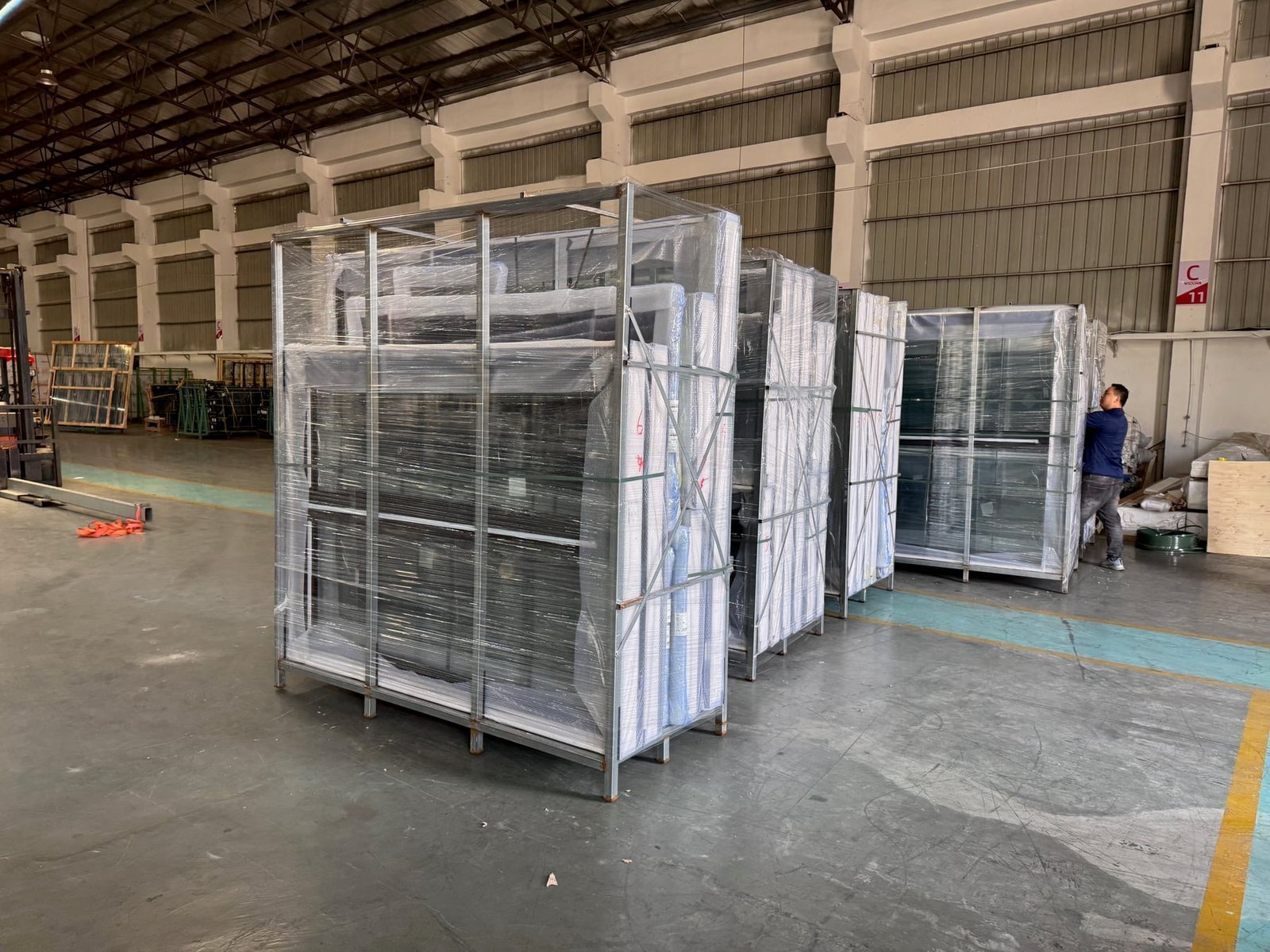
From the port the container moves by road to the site or to a transit warehouse. Glass travels on its edge in dedicated crates — never flat — because a lite laid flat carries its own weight across the whole pane and is far more likely to bow or crack in a hard stop. The route is checked for height, weight and turning room before the truck is booked, because a loaded glass crate does not bend around a tight access.
The transit time from port to site is short in city terms — often a few hours — but it is the part most exposed to the site itself: unmade roads, low branches, a gate that will not take the rig. A clean site delivery starts with the access checked, not discovered.
Who runs the last mile — by Incoterm
| Term | Last-mile leg booked by | Risk until | Unloads at site |
|---|---|---|---|
| FOB | Buyer | On board, origin port | Buyer |
| CIF | Buyer | On board, origin port | Buyer |
| DAP | Seller | Named place | Buyer |
| DDP | Seller | Named place, cleared | Buyer |
What the receiving yard checks before unloading
Before the crate leaves the truck the yard reconciles five documents against each other: the packing list keyed to the drawing sheet, the loading report with crate count and position per container, the bill of lading matching the crate count, the photo report at the loading gate, and the seal numbers recorded on departure and matched on arrival. If any of the five disagree, the unload pauses.
This is the same document set the container-loading article describes at the dock, read in reverse. The loading report puts each crate on the record at the bay before the seal goes on; the receiving yard reads it back at the gate. A short or over crate is caught at the truck, not after the crane has moved.
- Packing list per crate, keyed to the drawing sheet number.
- Loading report per container: crate count, sequence, position.
- Bill of lading matching the crate count, not the plan count.
- Photo report at the loading gate, per container, before sealing.
- Seal numbers recorded on departure, matched on arrival.
The crane, the ground and the lift plan
Glass and assembled sashes are lifted on edge, in the crate or on an A-frame, and set down on a prepared pad. The crane plan states the lift points and the sequence; the ground-bearing note states what the receiving yard will take the rig on, because a packed glass crate is deceptively heavy for its footprint and soft ground is the usual cause of a tipped load.
Where the yard is paved the note is short; where it is not, the delivery includes the plates or the mats. This is planned at the quotation stage on multi-storey or coastal work, because the lift is part of the delivery, not an afterthought the site sorts out on the day.
Unpacking the glass: edge storage, not flat
Once a crate is at the opening, the lites are stood on edge in their storage rack, never laid on a floor, and kept clear of where work is cutting or welding. The face is protected until the unit goes into the frame. A pane stored flat picks up a bow it will not give back, and a pane left where debris falls on it carries that mark into the glazing.
The unpack is also the inspection. The site agent opens the crate against the crate list, checks each lite against the drawing sheet, and notes any damage on the delivery receipt before signing. That note is what the claim runs on if a pane is found short or broken.

When glass breaks: insurance and the clock
Marine cargo cover for a container of glass should be Institute Cargo Clauses (A) — all risks — because ICC(A) is the level that pays for breakage, crushing and water damage in handling. ICC(B) and ICC(C), the narrower clauses, do not cover breakage, and the minimum cover written into a CIF term is usually too thin for a full container of laminated lites. Glass sits in the higher band of the premium, around 0.5 to 0.8 percent of the insured value, with a deductible near 3 percent.
The recovery side matters as much as the cover. Carrier liability under the Hague-Visby Rules is capped well below the cargo value — about 666.67 SDR per package or 2 SDR per kilogram — so cargo insurance, not the carrier, is the real recovery route. And the clock is tight: damage is noted on the delivery receipt at the truck, the insurer is notified within roughly 24 to 48 hours, and the carrier in writing within three days, with the packaging kept for the surveyor. The International Union of Marine Insurance puts inadequate packing behind an estimated 30 to 40 percent of all cargo claims, which is why the crate the glass rode in is part of the evidence.
A clean site delivery, step by step
Read back to front, a clean site delivery is a short chain with no loose ends: the Incoterm names who runs the last mile; the access and the ground are checked before the truck is booked; the five documents reconcile at the gate; the glass lifts on edge on a planned pad; the crate is opened against the list and any damage is noted on the receipt; and the insurance line on the order is ICC(A), not the minimum. None of it is complicated, and all of it is cheaper than a broken lite discovered after the crane has left.
Frequently Asked Questions
Does the factory deliver to my site?
Under DDP yes — the seller carries the shipment to the cleared site. Under FOB, CIF and DAP the buyer arranges the final delivery, so the factory delivers to the port or the named place and the buyer runs the last mile.
Who pays for the last-mile truck?
The Incoterm decides it. On FOB and CIF the buyer books and pays; on DAP and DDP the seller does, and the cost sits inside the delivered price.
How should glass be stored on site?
On edge in a storage rack, never flat, clear of cutting and welding. The face stays protected until glazing, and the pane is inspected against the crate list as the crate is opened.
What proves the crate count at delivery?
Five documents: the packing list keyed to the drawing sheet, the loading report, the bill of lading, the photo report and the seal numbers. If any disagree, the unload pauses until reconciled.
What if a lite is broken on arrival?
Note it on the delivery receipt before signing, notify the insurer within about 24 to 48 hours and the carrier in writing within three days, and keep the crate and packaging for the surveyor. The note on the receipt is what the claim runs on.
Is CIF insurance enough for a container of glass?
Usually not. The minimum cover a CIF term specifies is ICC(C), which does not pay for breakage. Glass needs Institute Cargo Clauses (A) — all risks — written on the order.
How long is the port-to-site leg?
Often a few hours in or near a city, longer for a remote or hard-access site. The transit is short; the access check is what keeps the site delivery clean.