
Factory
Packing and container loading
An export order is judged twice: once when the crate is opened on site, and once when the paperwork is reconciled against what arrived. Both are decided at the packing station, before the crate is closed. This page is the reference — what the crate is, how the unit is protected inside it, and what has to be settled first.
No container load figure is quoted here. A load depends on the crate design and the unit sizes, and one number published for twenty systems would be invented.
The packing sequence
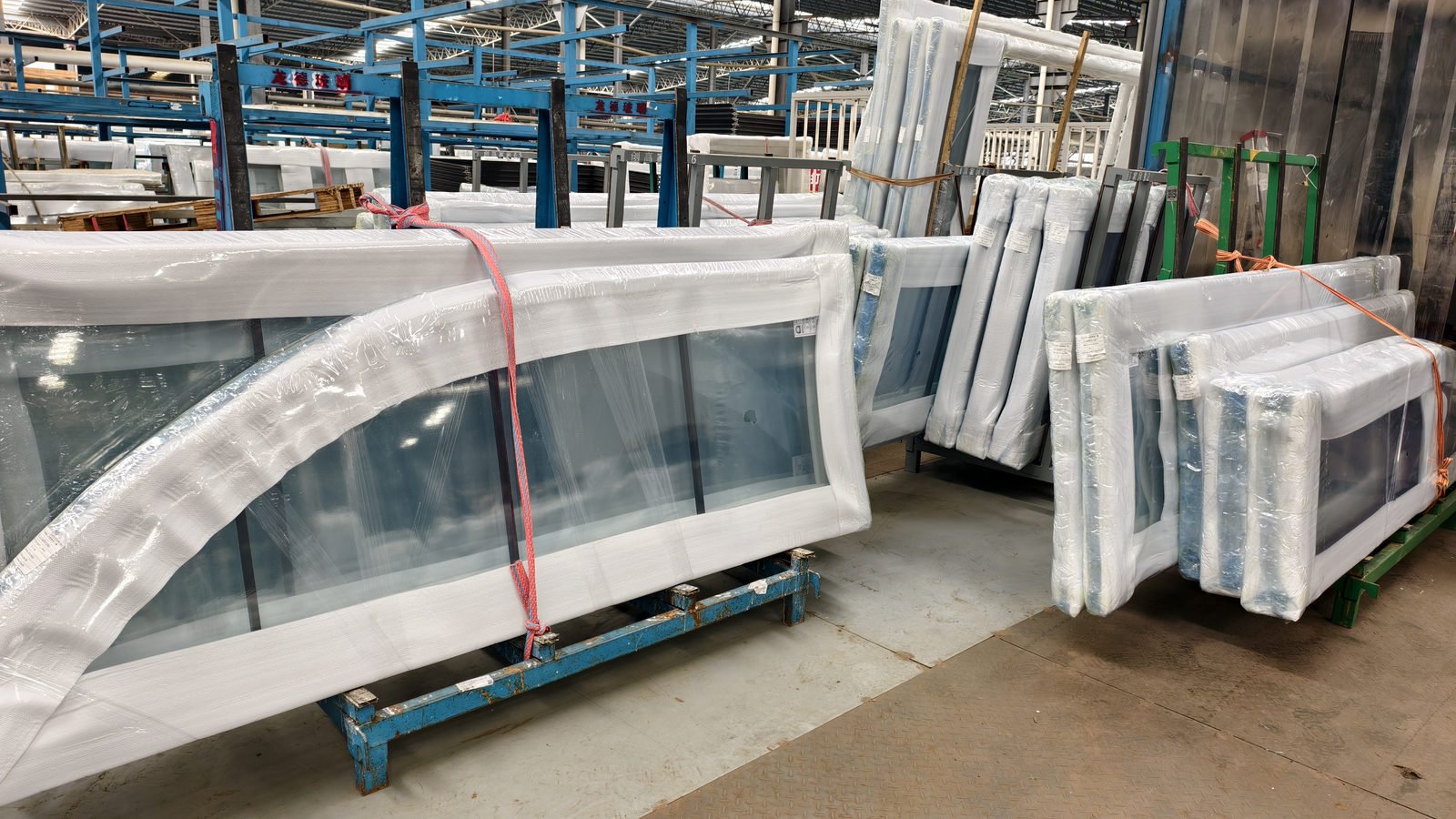
Corner and edge protection
Foam corner protectors and edge banding go on before the unit goes anywhere near a crate. The damage that matters on an export order is not a broken pane in the factory — it is a chipped edge or a scuffed finish that appears when the crate is opened, and it is almost always a protection problem rather than a handling one.
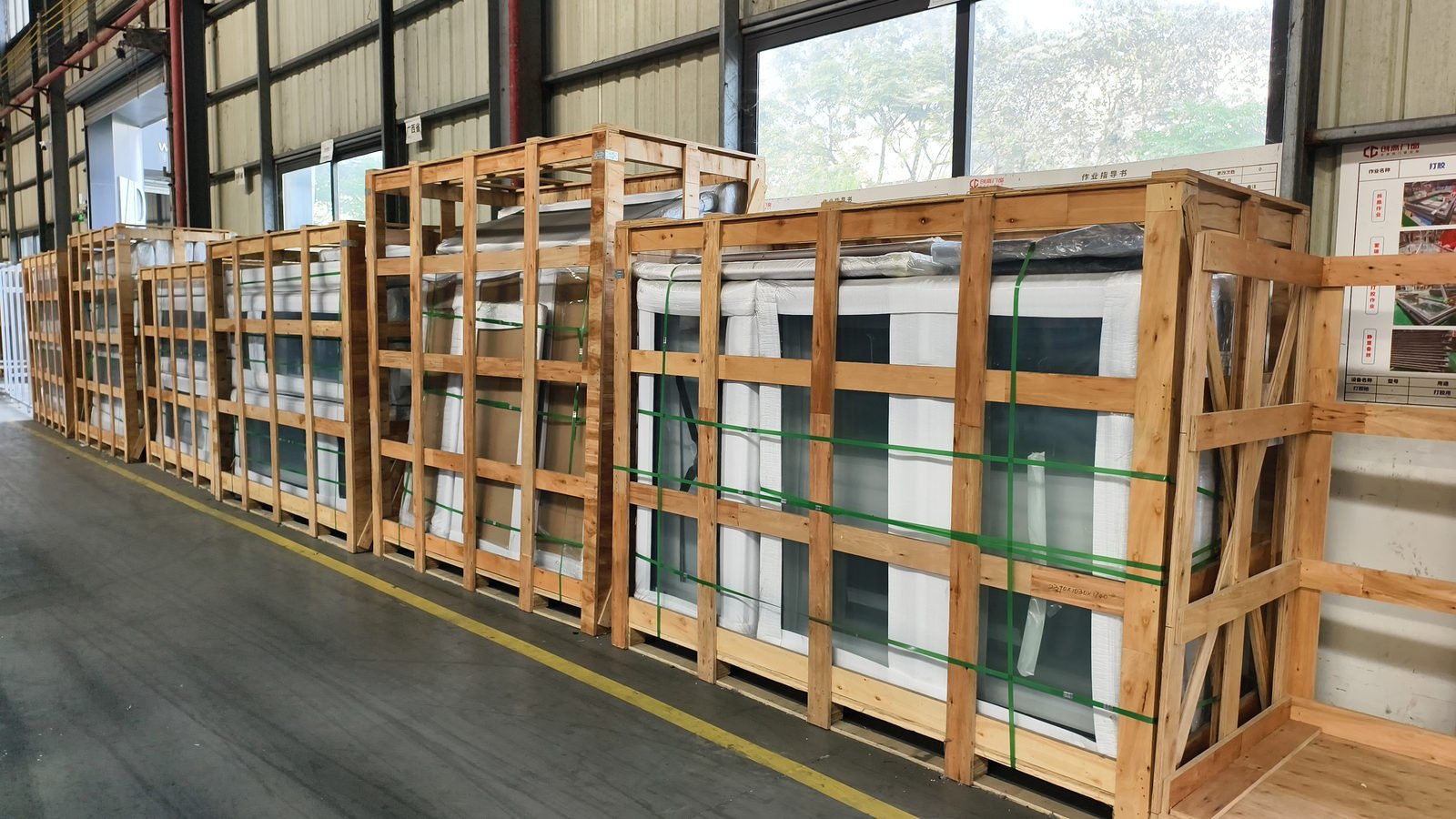
The timber crate
Units travel standing in a timber crate with internal bracing, so the load path runs through the frame rather than through the glass. The crate is built to the order, not to a standard box: the internal dimensions follow the unit sizes on the approved drawing.
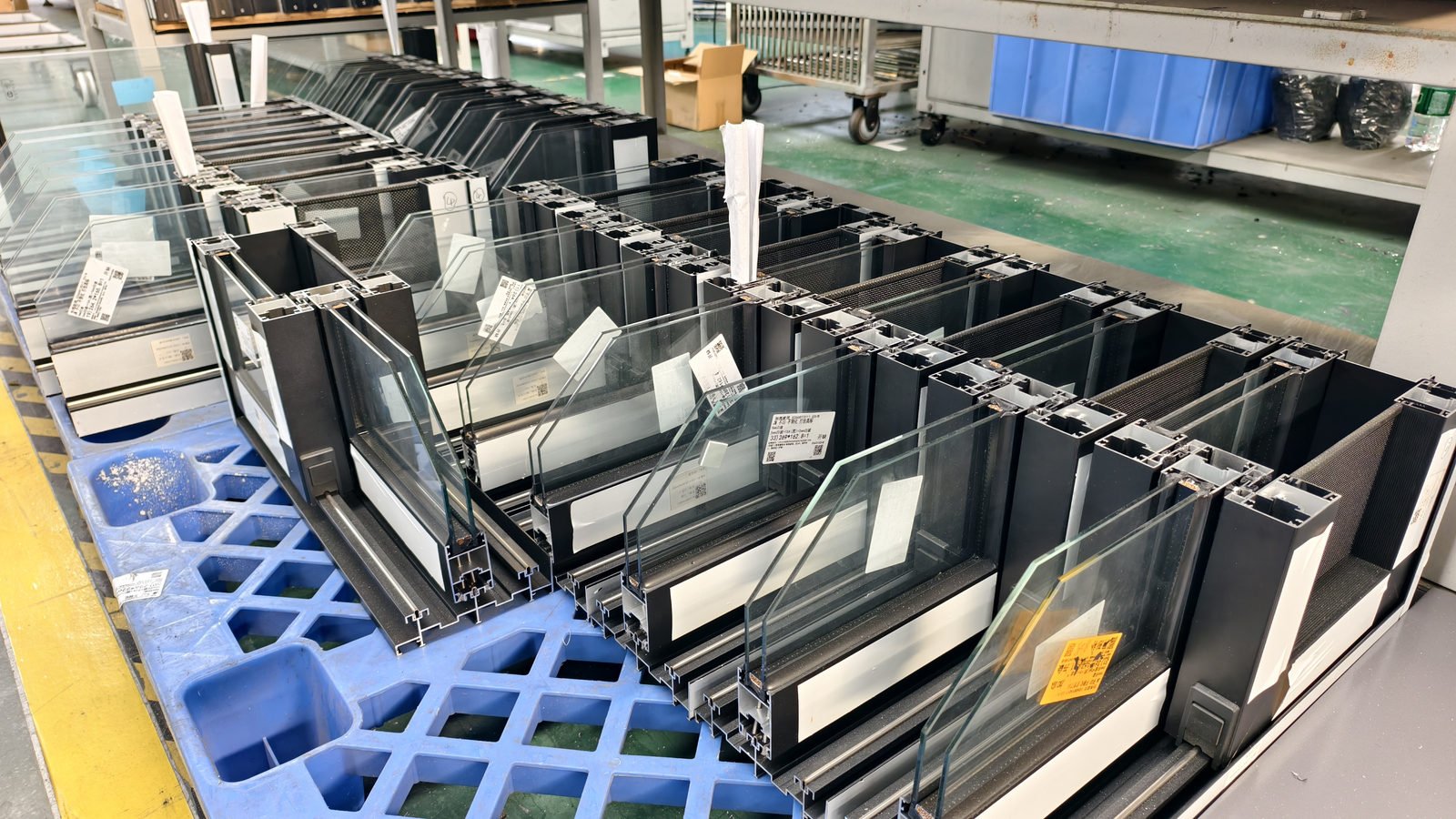
Pallet stacking and unit separation
Frames are stacked on pallets with a separator between units so the surfaces never touch. This is also the point at which the order is counted: the stack is the shipment, and a short stack found here costs a reprint of the paperwork, not a re-delivery.
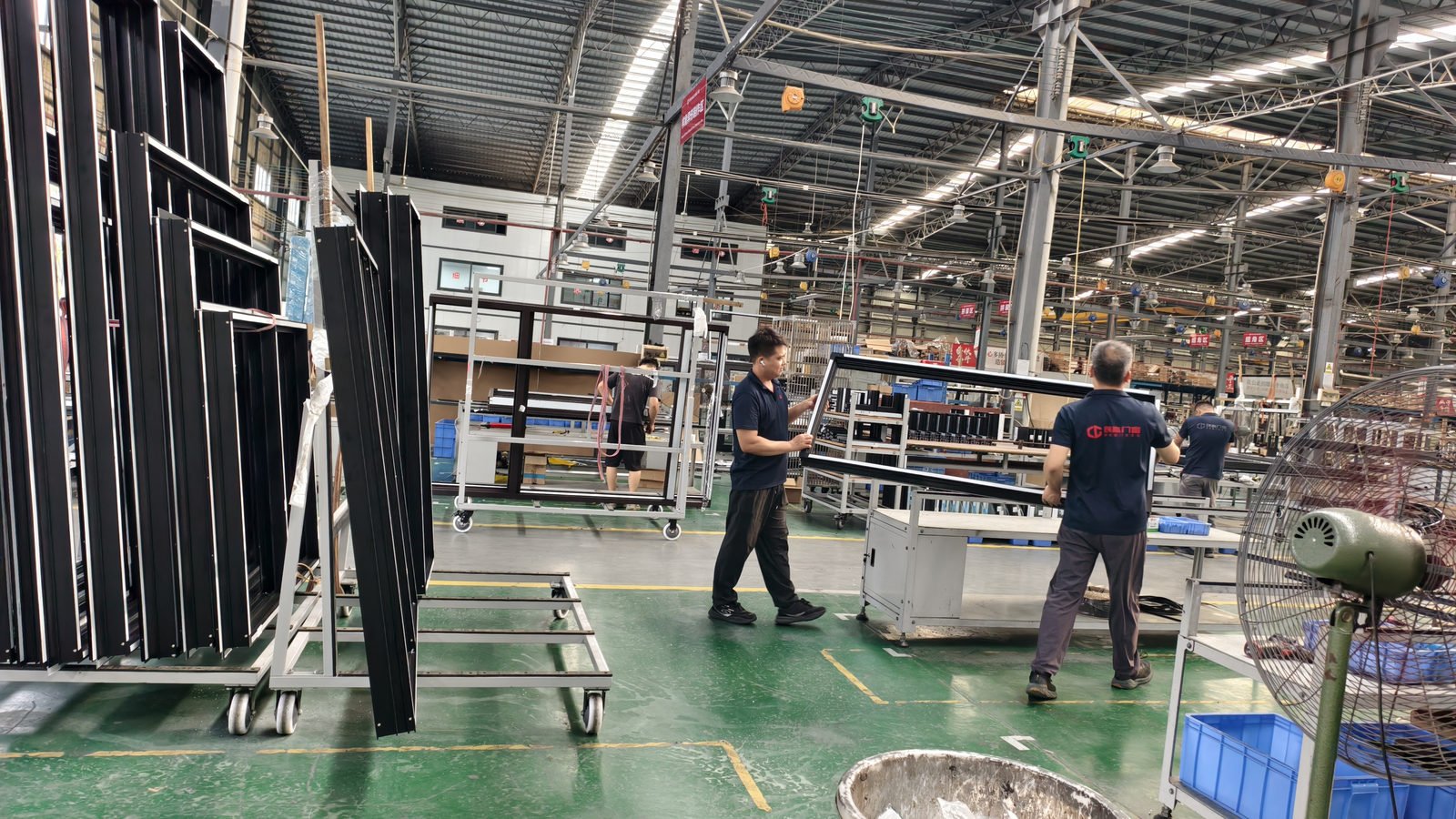
The packing station
Protection, crate, count and paperwork are settled at one station, in that order. Doing the paperwork before the count is the sequence that produces a crate that cannot be reconciled against the packing list when it arrives.
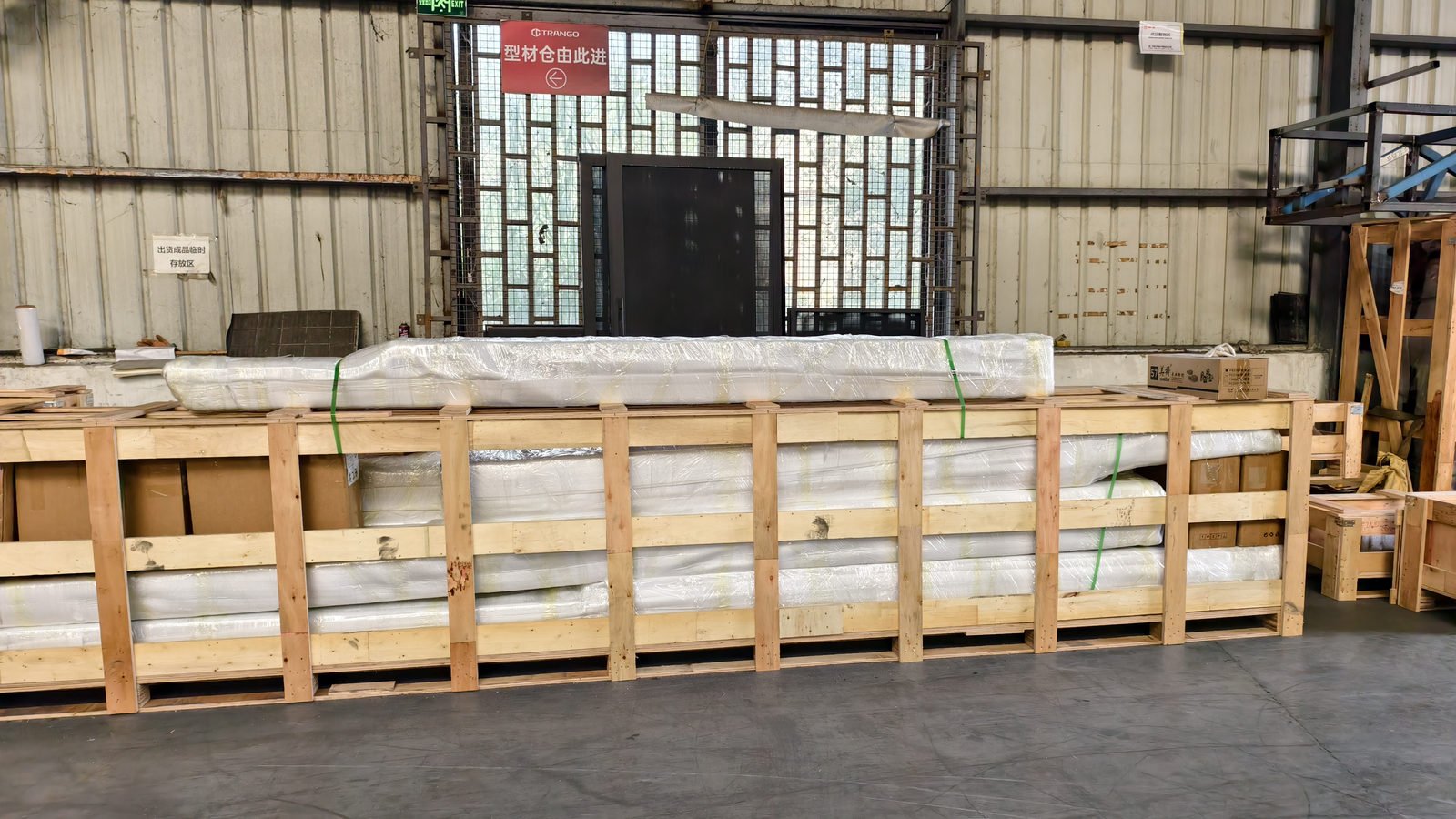
Crates staged for loading
Built crates are staged in the loading area, which is where the container number, the crate count and the packing list are reconciled for the last time. Anything that does not reconcile here does not reconcile at the port either.
What has to be settled before the crate is built
Every line below is a decision that becomes expensive once the timber is cut.
| Item | What is confirmed | What goes wrong when it is not |
|---|---|---|
| Unit sizes | From the approved drawing, not from the quotation | The crate is built to the drawing. A size changed after the drawing was approved is a crate built to a unit that no longer exists. |
| Glass orientation in the crate | Standing, with the load through the frame | A crate built for units lying flat changes the load path and the internal bracing with it. |
| Crate external dimensions | Settled against the container, not the unit | A crate that fits the unit but not the container is a re-build at the port. |
| Document set | Packing list, report references, label photographs | Assembled before the crate is closed. Requesting it after shipment means the crate is opened again. |
| Marking | Crate number, unit codes, handling marks | What the receiving party uses to check the count without opening every crate. |
The commercial terms behind packing, minimum order and delivery are the same on every quotation and sit on commercial terms. The order-level checklist — opening, handing, glass build, finish, documents — is on the quality control page.
What buyers ask about shipping
How many units fit in a container?
It depends on the crate design and the unit sizes, which is why no single figure is published here. What is settled before loading is the crate external dimensions against the container, and the crate count against the packing list. Ask for the load plan with the crate dimensions on it rather than a units-per-container number.
Do the units travel standing or lying?
Standing, in a timber crate with internal bracing, so the load runs through the frame. A crate designed for units lying flat is a different crate, and it has to be asked for explicitly because it changes the internal dimensions.
What protects the glass in transit?
Foam corner protectors and edge banding, then the crate bracing. The failure mode that shows up at delivery is a chipped edge or a scuffed finish, which is a protection problem rather than a handling one, and it is settled at the packing station before the crate is closed.
What documents travel with the crate?
The packing list, the report references for the configuration, and label photographs where the market requires a permanent label. All of it is assembled before the crate is closed; a document requested after shipment means opening the crate again.
Can we inspect the packing before loading?
Yes, and it should be named in the order: at the packing station, or at the container before the doors close. An inspection arranged after the doors close can only check the crate markings and the count.
The reasoning behind load planning, Incoterms and last-mile delivery is set out in the insight library: container loading for windows, Incoterms for window orders and site delivery and the last mile.