
Factory
Quality control: the checkpoints, and the paperwork
Every supplier says quality control. The version a buyer can act on is not the claim — it is the list of points where a unit is actually checked, and the documents that travel with the crate. This page sets out both, and is deliberate about the one thing it does not do: it quotes no tolerance and no pass rate, because those belong to the factory procedure and to the test report, and an invented number on a page is worse than no number.
Three checkpoints
The order matters. A defect found at the first checkpoint costs a correction; the same defect found after the seal is closed costs the unit.

After the frame is assembled
The sash is checked against the frame it was built for: squareness at the corners, the reveal around the glass, and whether the leaf sits square in the opening. This is the last point at which a frame can be corrected without taking the unit apart.

Against the row behind it
Finished units are compared to each other, not only to the drawing. Two units from the same order that do not match each other is the defect that survives a per-unit check, and it is the one the site finds first.
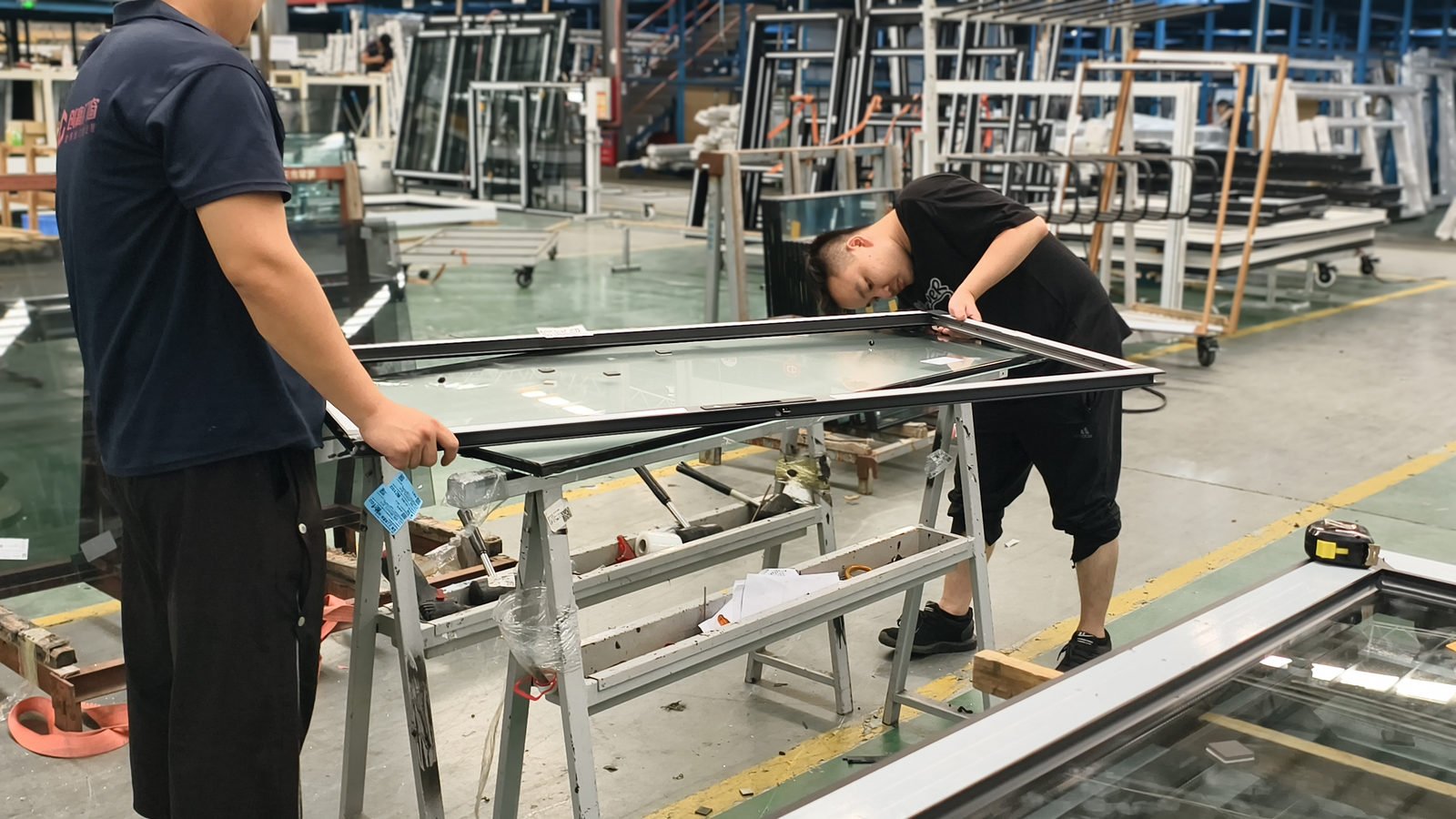
Before the glass goes in
The pane, the seal and the spacer are checked as a set before the bead goes on. Once the unit is glazed, the only way to correct a wrong build is to destroy the seal, and a re-sealed unit is not the unit that was tested.
What the paperwork has to say
Test report per configuration
One configuration, one report. The report names the laboratory, the series tested and the values measured. A report covering a different glass build or a different frame depth does not certify the unit you ordered.
Report number on the document
A report number is what makes the figure checkable. Without it, a performance figure is an assertion. Ask for the number and the issuing laboratory before the order is placed, not after delivery.
What the label carries
Where a market requires a permanent label, it names the company placing the unit on the market, the frame and operation type, the glazing build including the low-e surface number, and the registered model number.
Declaration, where the market runs on declared performance
Under Construction Products Regulation 305/2011 a performance is declared rather than rated. The declaration states which standard was applied and the value achieved, and it is issued for the configuration it names.
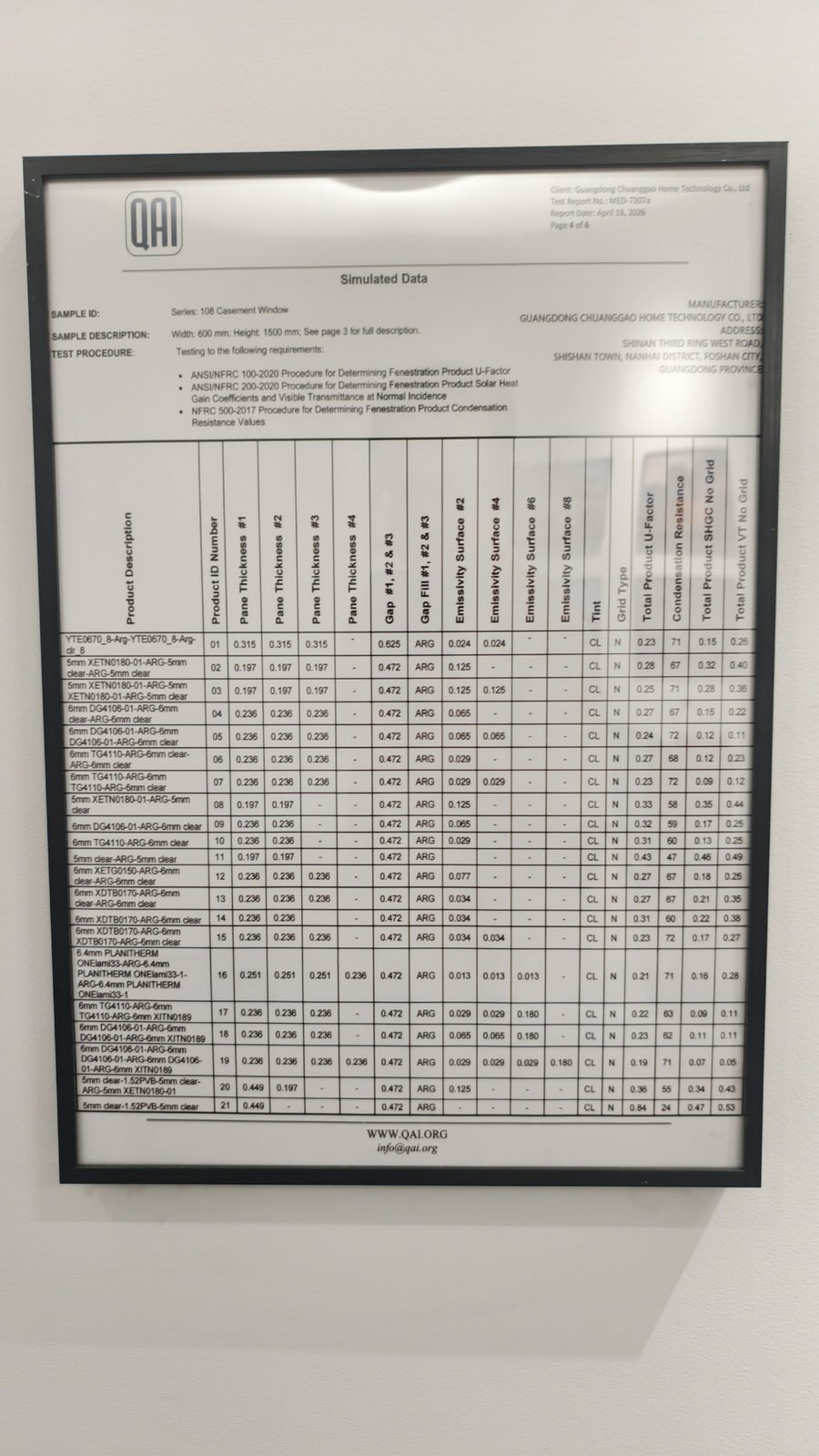
How to read a data sheet without guessing
A ratings table is a list of rows, and each row is one tested configuration with its own identifier. Three things decide whether the row covers your unit: the glass build, the tested size, and the frame the row was measured on. A row that matches the product name but not the glass is not your configuration.
The code system behind a North American entry is published separately, field by field, so a label can be decoded rather than taken on trust.
NFRC CPD codes — the full decode →Published glass performance tables →
What buyers ask before an order
Do you issue a certificate per product or per configuration?
Per configuration. A performance figure is measured on one build — one frame, one operation, one glass make-up — and the report covers that build. Two products from the same range with different glass are different configurations, and a certificate naming one does not certify the other.
What should we ask for before placing an order?
The report number and the issuing laboratory for the configuration you are specifying, the tested size, and the date. Then check that the tested size covers your largest opening and that the glass build on the report is the build on the order.
Can a certificate be issued after shipment?
A report can be re-issued, but a unit cannot be re-tested after it has left. If the configuration was never tested, no document produced afterwards will make it tested. This is why the report is settled before the order, not after the crate.
Who signs off a finished unit?
The line checks against the drawing, the unit is checked against the other units in the same order, and the glazing is checked before the seal is closed. Those three are the checkpoints shown on this page. Anything beyond them — a formal inspection protocol, a third-party pre-shipment inspection — can be arranged and should be named in the order.
Do you allow third-party inspection?
Yes, and it should be written into the order with the inspection point named: at the line, before loading, or both. A pre-shipment inspection arranged after the crate is closed can only check what is visible from outside.
The reports and declarations behind our own figures are listed under certifications and test standards, and the shop-floor sequence they refer to is set out on the process page.