
Factory
How an aluminium window is actually made
Ten operations, in the order they happen. A buyer comparing two suppliers is really comparing which of these each one actually runs, and in what order — which is why this page is written as a sequence rather than a capability list. Each step says what it is for and what it prevents, and no cycle time, tolerance or headcount is quoted: those belong to the factory procedure, and a plausible number invented for a page is the thing that discredits the rest of it.
The sequence
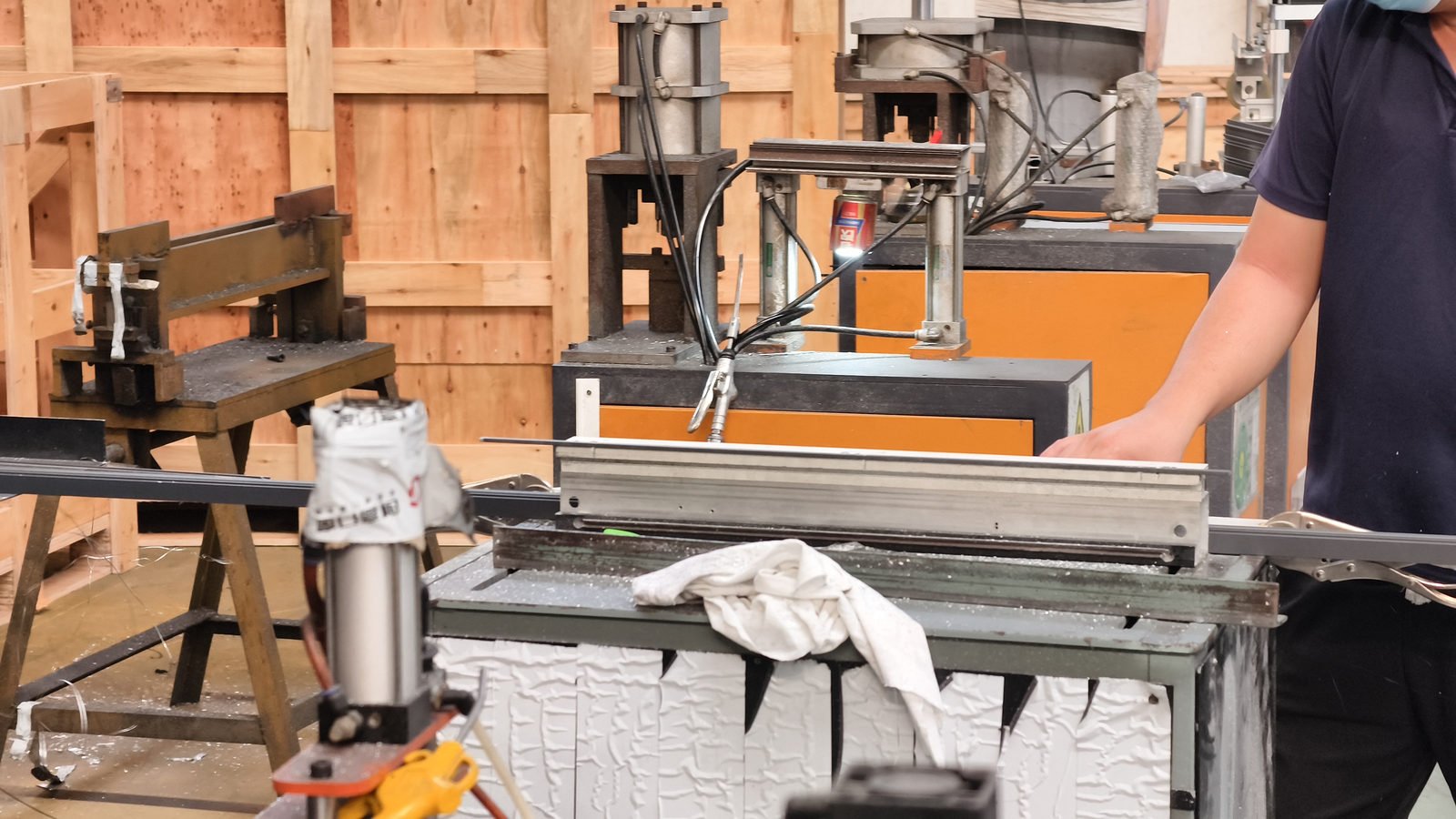
Profile cutting
The profile is cut to length on a double-head saw, both ends in one pass so the two cut faces are square to each other. Everything downstream assumes this cut is square: a frame built on an out-of-square cut cannot be corrected later, because the error is already inside the corner.
A corner that will not close, and a sash that binds along one edge only.

CNC machining
Drainage slots, lock points, screw ports and the recesses for the hardware are cut on a CNC machining centre. This is where the profile stops being a length of extrusion and becomes a frame part: every hole that will later carry a load or let water out is cut here.
Water that has nowhere to go, and hardware that has to be forced into a hole that was never cut for it.
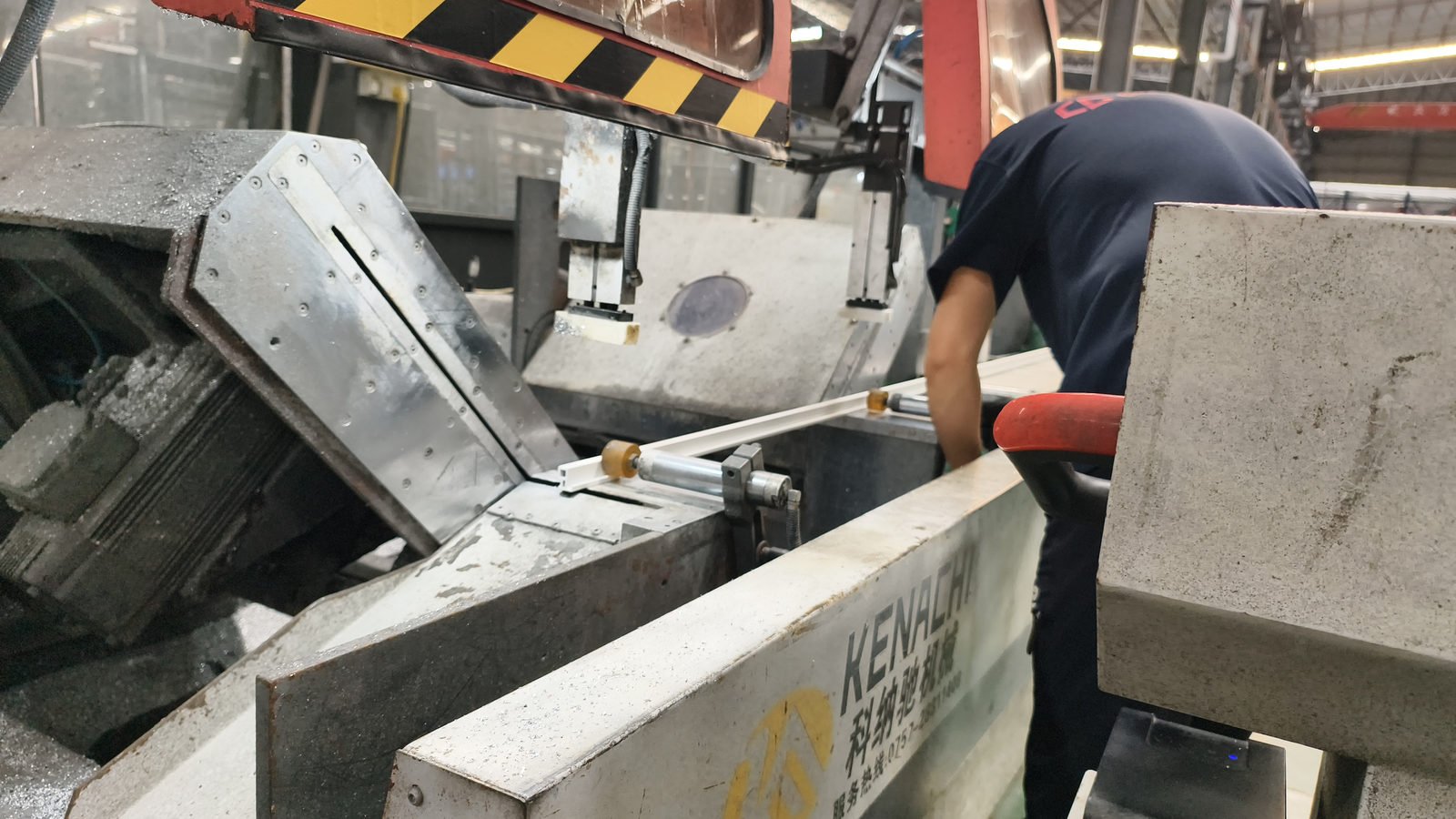
End milling
The cut ends are milled to the profile the corner joint needs — flat, stepped or notched. The corner joint is the load path of the whole frame, and it is shaped here rather than at assembly.
A corner joint that looks closed but has no bearing surface, which fails at the first wind load.
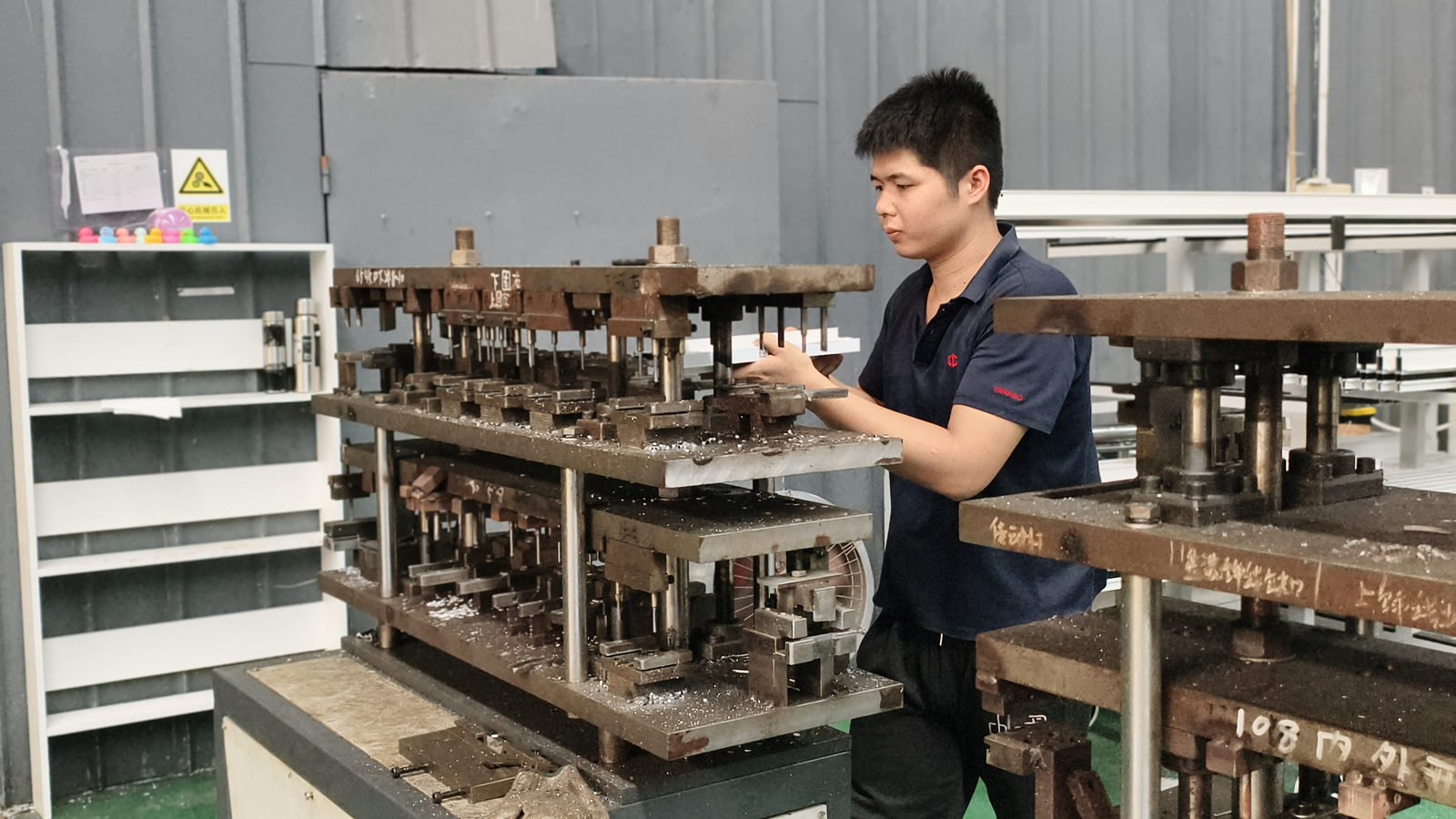
Punching and bracket preparation
Holes for the corner brackets and the fixing ports are punched rather than drilled. The bracket that will tie the corner together is prepared in the same operation, so the joint and its reinforcement are cut as a set.
A corner tied by a bracket that was never drilled to match it.
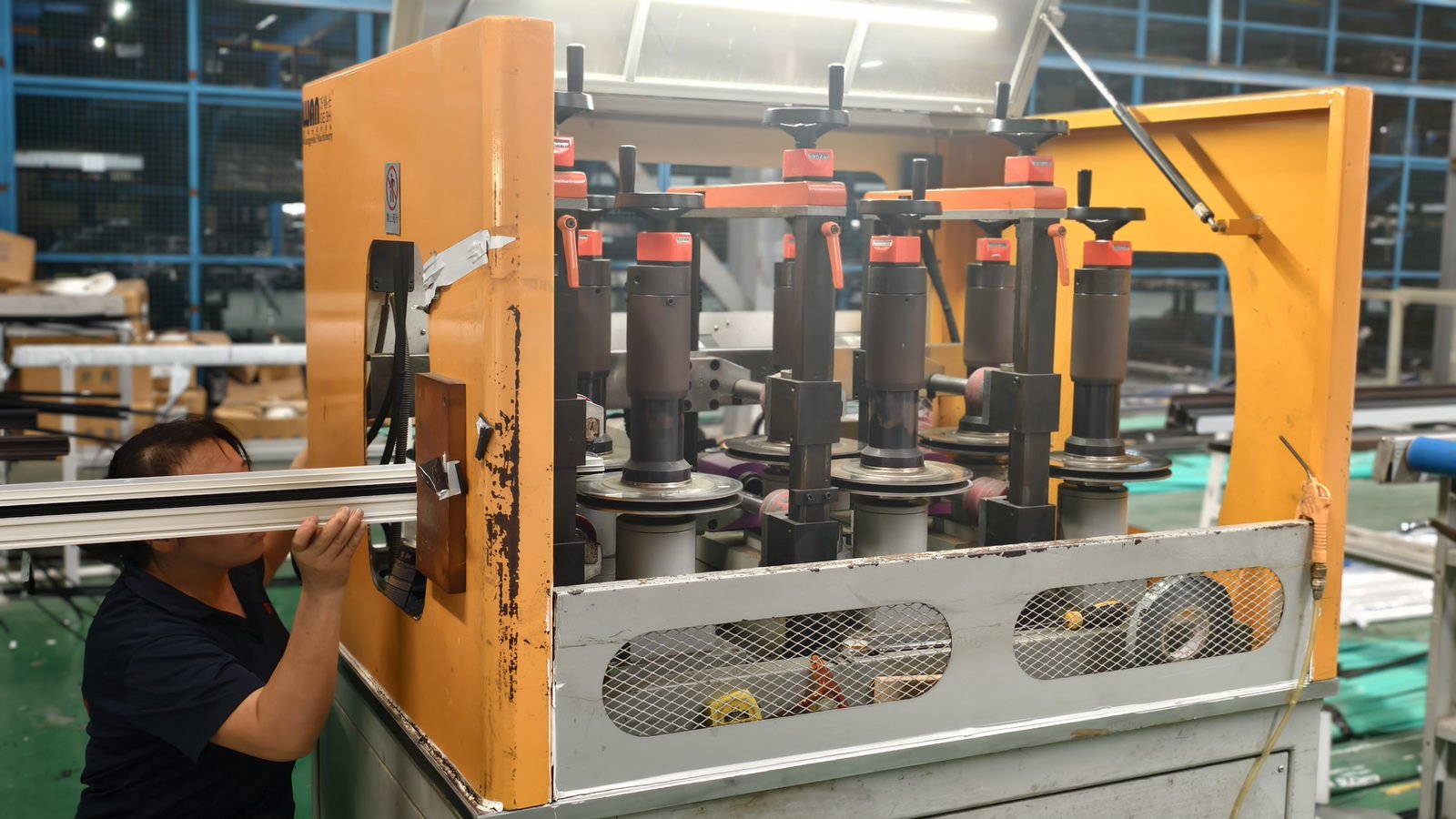
Corner crimping
The two prepared ends are brought together and the corner is crimped, driving the bracket into the profile and locking the joint mechanically. This is the operation that turns four lengths of profile into a frame.
A frame that is held by sealant alone, which is a frame held by the weakest material in it.
Glazing
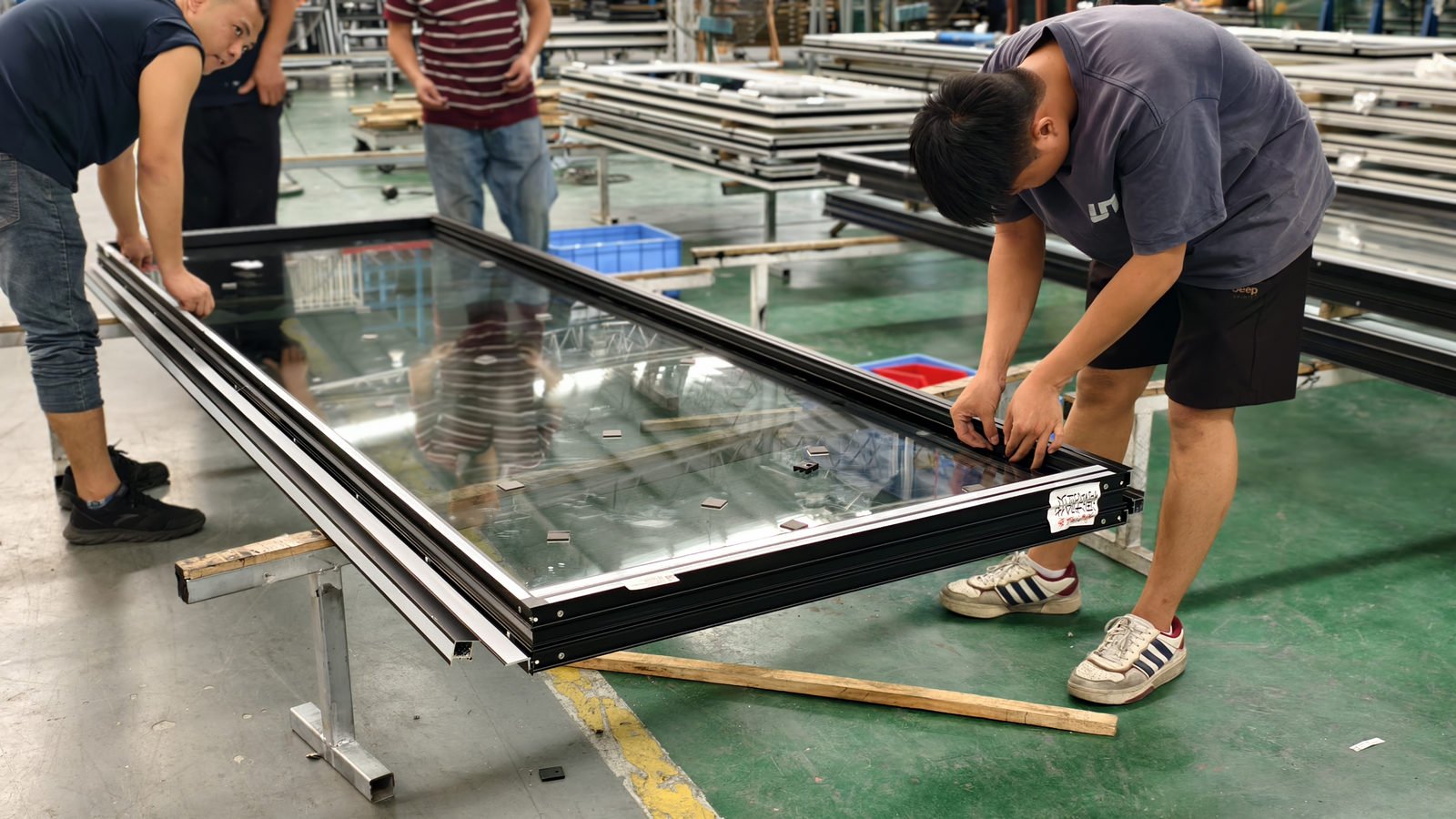
The insulated glass unit is set into the sash on its setting blocks, with the drainage path clear and the sealant bed continuous. Two people, because a pane set by one is a pane that has to be lifted out again.
A pane bearing on the frame instead of on its blocks, and a sealant bed with a gap in it.
Sealing
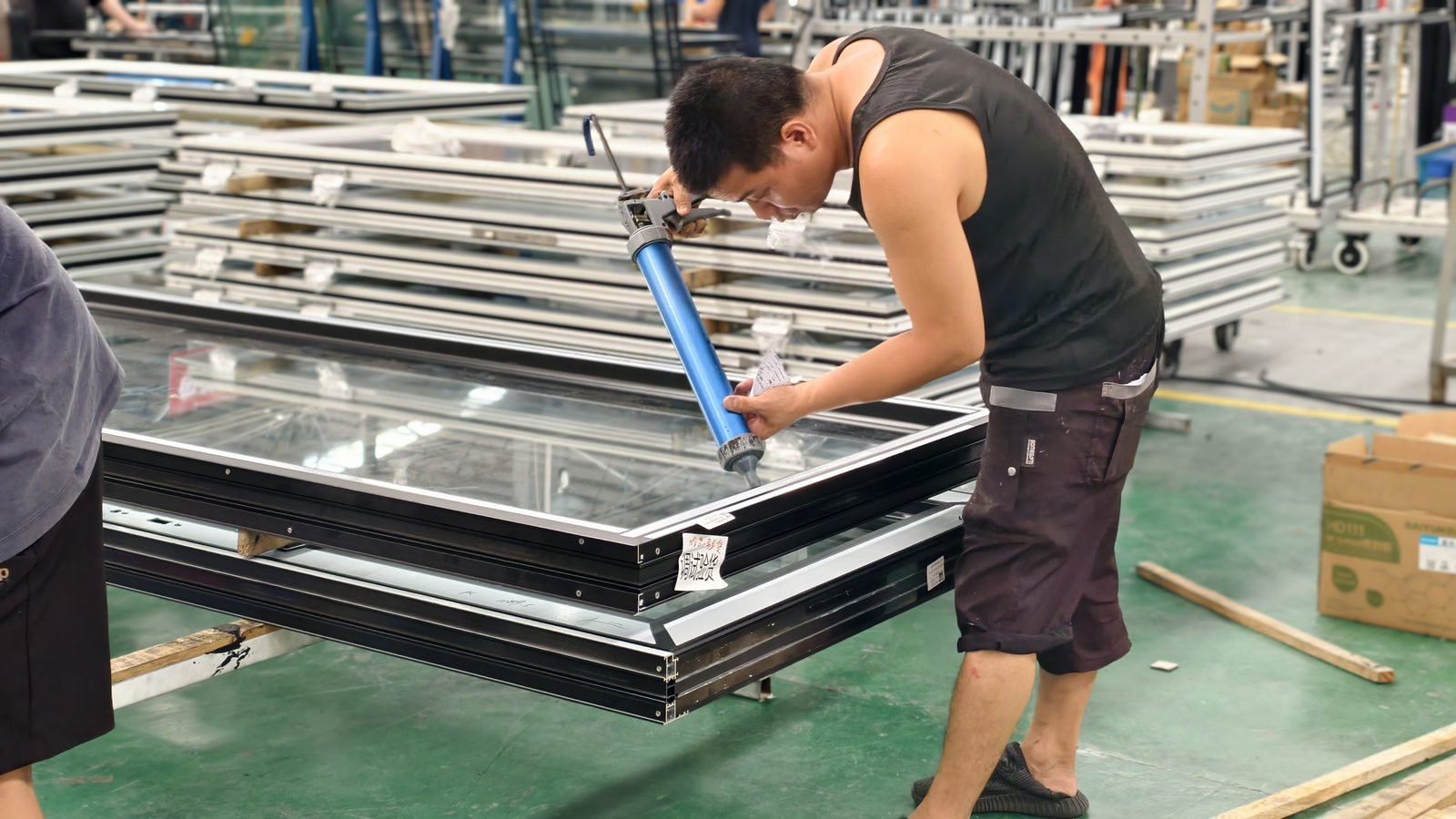
The structural and weather seals are applied along the glass edge and around the bead. The seal is what keeps the cavity dry for the life of the unit, and it is the one operation on this list that cannot be inspected afterwards without destroying it.
A unit that passes the water test on the day and fails it in the second winter.
Hardware and gaskets
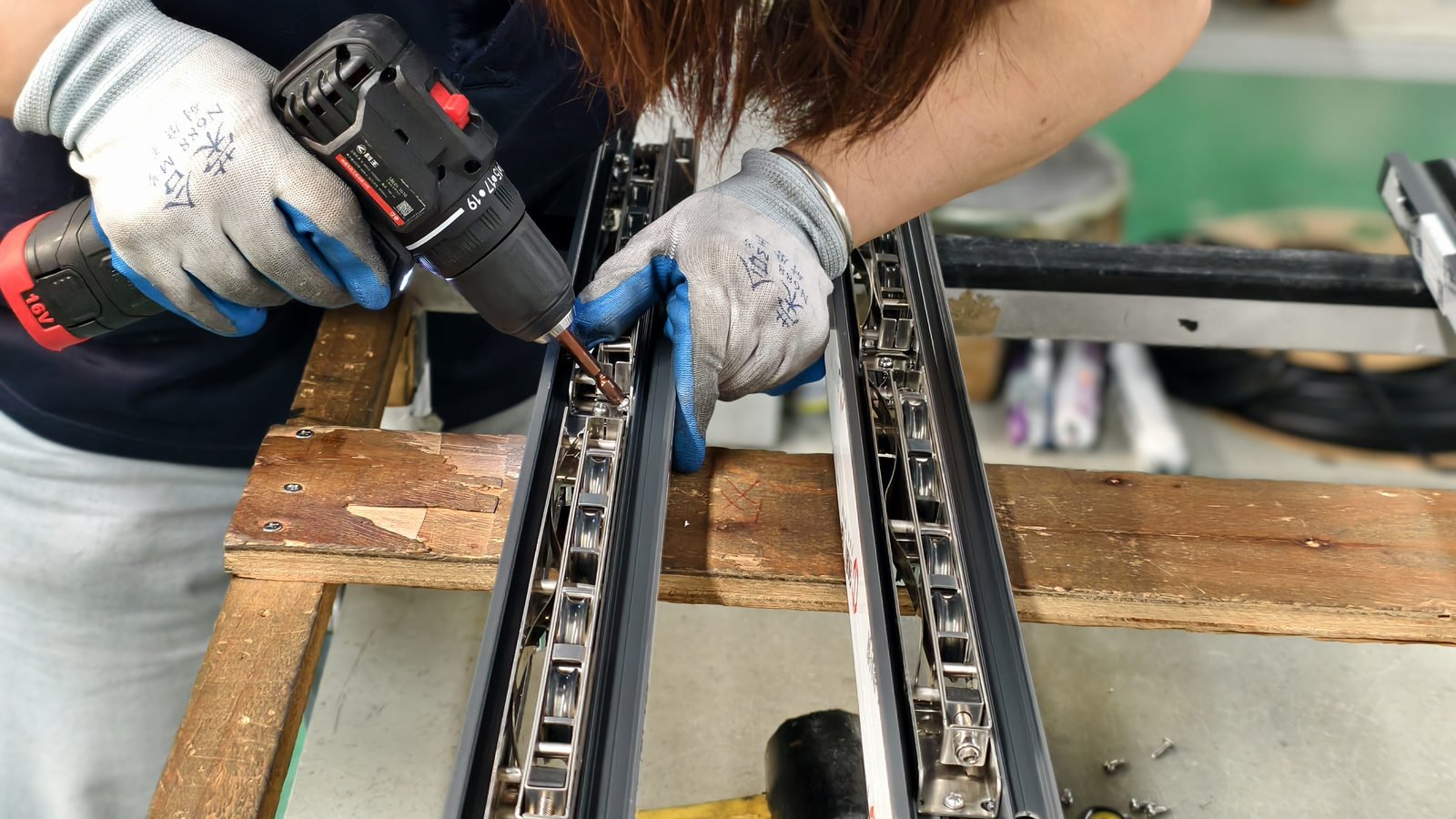
Handles, hinges, locking points and the gasket set are fitted to the finished frame. The gasket is a compression seal, so it is fitted to a dimension rather than pressed to fit: a gasket stretched into place is a gasket that has already lost its seal.
A lock that does not engage its point, and a gasket that seals on the day and leaks in the first hot summer.

Check against the drawing
The finished unit is checked against the frame it was built for and against the units beside it in the same order. This is the last point at which a frame can be corrected without taking the unit apart.
Two units from one order that do not match each other — the defect a per-unit check cannot see.
Packing for export
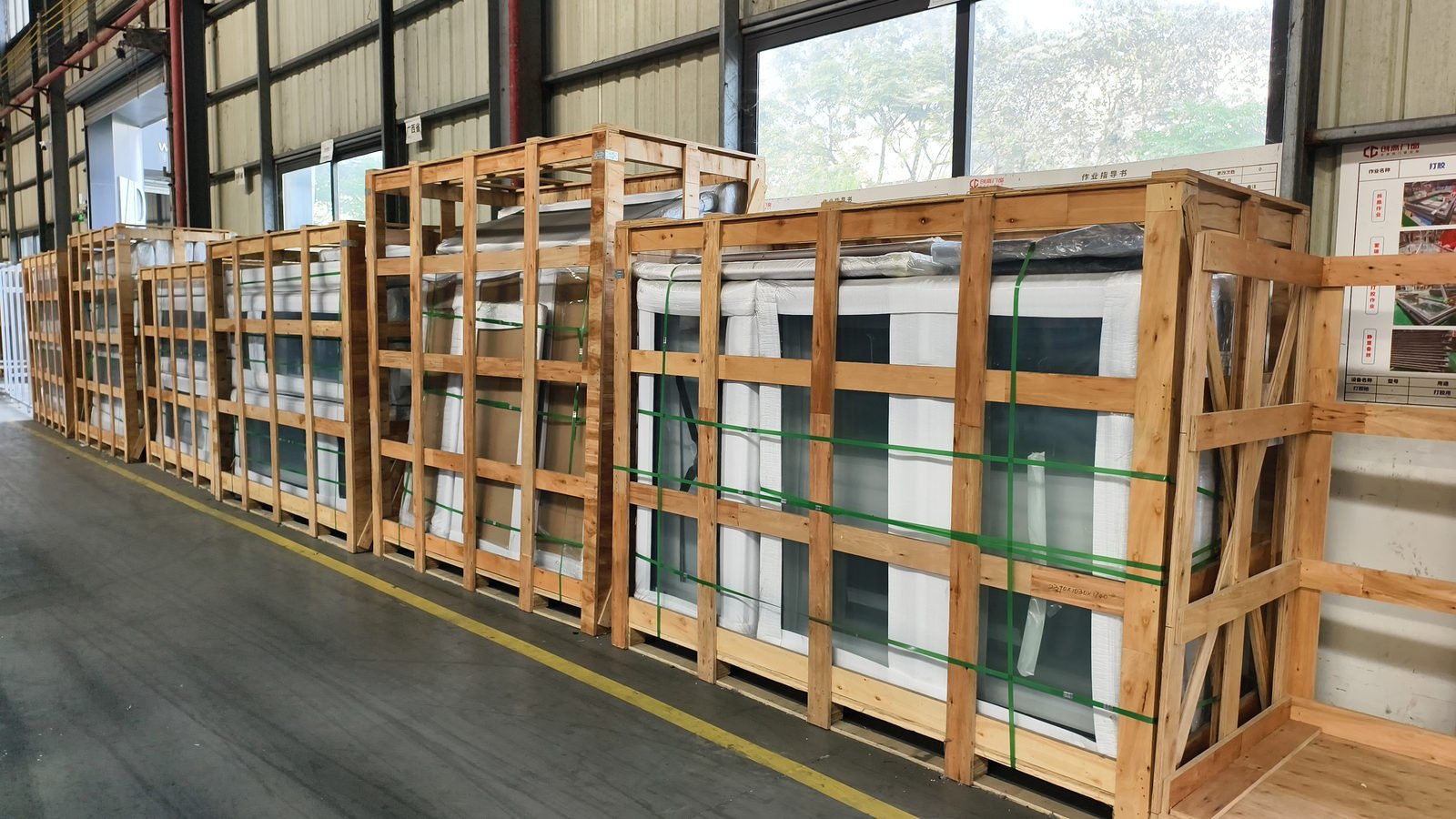
Protection, crate, count and paperwork are settled at the packing station before the crate is closed. What is decided here is what the receiving party finds when the timber comes off.
A crate that cannot be reconciled against the packing list when it arrives.
Where each step is checked
At the machine
Cutting, CNC and end milling are checked against the drawing at the machine. An error caught here is a re-cut; the same error caught after crimping is a scrapped frame.
At the station
Glazing, sealing and hardware are checked at the station before the unit moves on. The seal is the operation that cannot be inspected later without destroying it, so it is checked as it is applied.
Against the order
The finished unit is checked against the drawing and against the units beside it in the same order. The checkpoints and the paperwork that travels with the crate are set out on the quality control page.
Quality control checkpoints →What buyers ask about the line
How long does the whole sequence take?
No figure is published here, because the honest answer depends on the order size, the number of systems on it and the finish lead time. Lead time is quoted per order against the drawing, and the discussion of what drives it is in the insight library.
Which step is the one most often skipped?
End milling. It is invisible on a finished frame and it is the operation that gives the corner joint its bearing surface. A frame with a joint that looks closed but has no bearing surface passes a visual check and fails under wind load, which is why it is shaped at the machine rather than at assembly.
Is the glass unit made in the same factory?
The insulated unit is assembled to the build on the order — pane, coating, spacer and cavity fill — and the performance figure for that build comes from the glass manufacturer and from the test report. The coating, gas and spacer decisions are set out separately on the glass performance page.
Can we visit and watch the line?
Yes, and it is worth naming the operations you want to see rather than a general factory tour: the corner crimping station and the glazing station tell you more about a supplier than a finished-goods display does.
Do you run a pre-treatment or finishing line?
Finishing is a separate operation with its own lead time, and the schedule for a coastal address is different from the standard one. The finish options and their grades are listed on the finishes page; the marine-grade requirement should be raised before the finish is booked.
The specification order these operations serve — standard, glass, frame, operation, hardware, finish, then the wall interface — is the subject of the specifying guide. Export packing is covered on the packing and loading page.